Kakku Pagodas, Myanmar – The Ancient Stupa Forest of Shan State
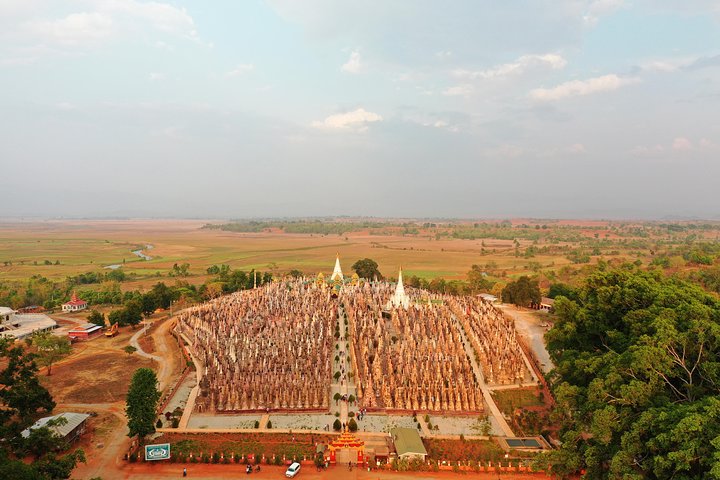
Kakku Pagoda is one of Myanmar’s most impressive hidden treasures. Located in Shan State near Inle Lake, this vast complex holds more than 2,500 ancient stupas spread across rolling hills. The pagodas create a forest of stone and gold that stretches as far as the eye can see.
Local Pa-O people protect and maintain this sacred site. Visitors come here to experience peace, history, and breathtaking views.
History of Kakku Pagoda
Kakku dates back over 2,000 years. Buddhist missionaries first built the earliest stupas during the reign of King Asoka. Over time, local rulers and devotees added more pagodas, turning the site into a major religious center.
Many of the stupas show unique Shan-style carvings and stone designs that differ from those in Bagan or Mandalay.
What Makes Kakku Pagoda Special
Unlike crowded temples, Kakku feels open and quiet. Visitors walk among thousands of stupas, each with its own design and story. Some towers stand tall and sharp, while others lean with age.
The hills surrounding Kakku offer panoramic views of southern Shan State.
Visiting Kakku Pagoda
Kakku is about 40 kilometers south of Inle Lake. Most travelers visit with a local guide from Nyaung Shwe. The drive passes through Pa-O villages and farmland.
The best time to visit is from November to February, when the weather stays cool and dry.
Why Kakku Matters
Kakku Pagoda shows the deep Buddhist faith of the Shan and Pa-O people. It stands as one of Myanmar’s largest and most beautiful stupa fields.
For travelers who want to explore beyond the famous sites, Kakku offers a unique and unforgettable experience.
Frequently Asked Questions (FAQ)
1. Where is Kakku Pagoda located?
It is in Shan State near Inle Lake, Myanmar.
2. How many stupas are at Kakku?
The complex contains over 2,500 stupas.
3. Who looks after Kakku?
The local Pa-O community maintains the site.
4. How do you get there?
Most visitors go from Nyaung Shwe by car with a guide.
5. When is the best time to visit?
November to February offers the best weather.
6. Is Kakku crowded?
No. It is much quieter than Bagan or Shwedagon.
7. Is there an entrance fee?
Yes. Visitors pay a small local fee.