Daw Aung San Suu Kyi: Life, Leadership, and Political Legacy
Introduction
Daw Aung San Suu Kyi is one of the most significant and complex political figures in modern Myanmar history. Internationally recognized as a symbol of democratic resistance during decades of military rule, she later became the country’s most powerful civilian leader. Her legacy spans global admiration, political authority, and deep controversy—making her a central figure in Myanmar’s political narrative.
As the daughter of independence hero General Aung San, Daw Suu Kyi’s life has been shaped by history, expectation, and responsibility. Her rise, governance, and eventual removal from power reflect both Myanmar’s democratic aspirations and its unresolved structural challenges.
Early Life and Education
Daw Aung San Suu Kyi was born on 19 June 1945 in Rangoon (Yangon). Her father, General Aung San, was assassinated in 1947, before Myanmar gained independence. Raised primarily by her mother, Daw Khin Kyi, a diplomat and social worker, Suu Kyi spent much of her youth abroad.
She was educated at:
University of Delhi
University of Oxford, where she studied Philosophy, Politics, and Economics (PPE)
Her international upbringing shaped her worldview, combining Western political theory with a strong sense of Burmese national identity.
Entry into Politics
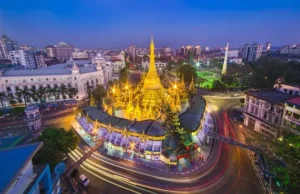
Daw Aung San Suu Kyi returned to Myanmar in 1988, initially to care for her ailing mother. That year coincided with nationwide protests against military rule. Her public speech at Yangon’s Shwedagon Pagoda marked her entry into national politics.
Soon after, she co-founded the National League for Democracy (NLD), positioning herself as the civilian face of Myanmar’s pro-democracy movement.
House Arrest and Political Struggle
Between 1989 and 2010, Aung San Suu Kyi spent nearly 15 years under house arrest. Despite her detention, the NLD won a landslide victory in the 1990 general election, results that were ignored by the military government.
During this period, she became a global symbol of non-violent resistance, drawing comparisons to figures such as Nelson Mandela and Mahatma Gandhi.
International Recognition
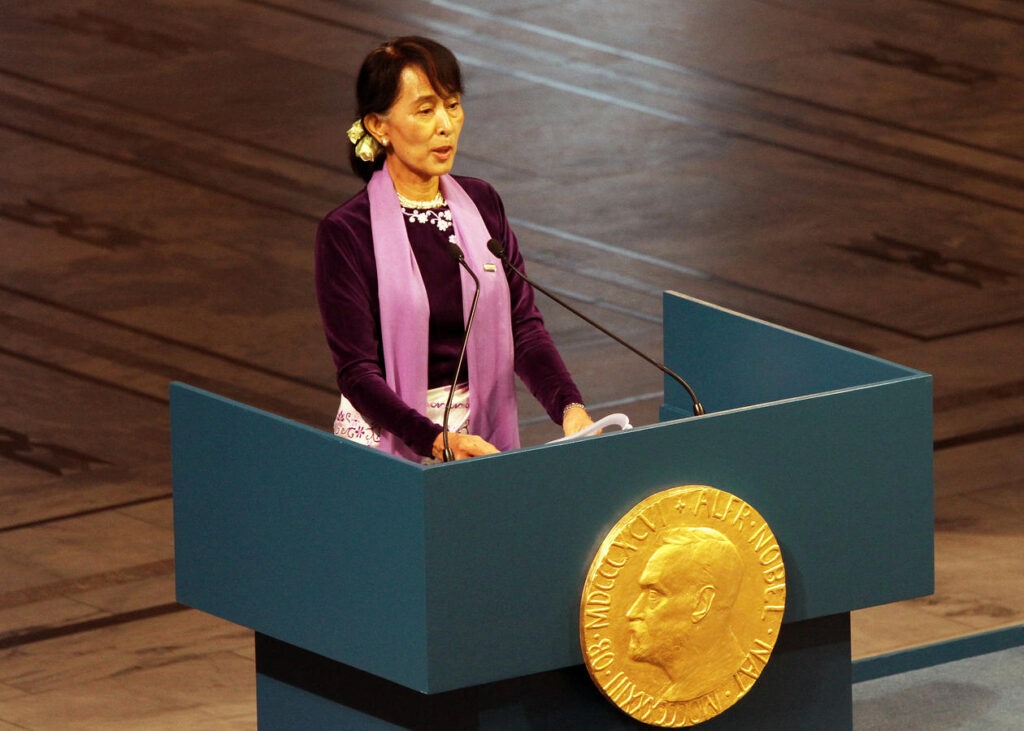
In 1991, Daw Aung San Suu Kyi was awarded the Nobel Peace Prize for her commitment to democracy and human rights. She also received:
Sakharov Prize
Jawaharlal Nehru Award
Numerous honorary degrees and international honors
Her global reputation elevated Myanmar’s democracy movement onto the world stage.
Rise to Power
Political reforms beginning in 2010 allowed Daw Aung San Suu Kyi to re-enter formal politics. The NLD won the 2015 general election, marking a historic transition toward civilian governance.
Due to constitutional restrictions barring her from the presidency, Daw Suu Kyi assumed the role of State Counsellor, becoming Myanmar’s de facto leader.
Leadership as State Counsellor
As State Counsellor from 2016 to 2021, Aung San Suu Kyi oversaw:
Economic liberalization efforts
International re-engagement
Peace negotiations with ethnic armed groups
However, her administration operated under severe constraints imposed by the military-drafted constitution, which preserved significant military power.
Controversies and Criticism
Daw Aung San Suu Kyi’s global standing declined sharply over her government’s handling of the Rohingya crisis. Critics accused her of failing to prevent human rights abuses and of defending the state at international forums.
Her supporters argue that:
The civilian government lacked control over the military
Public confrontation risked political collapse
Structural reform was gradual and constrained
These debates continue to shape assessments of her leadership.
2021 Military Coup and Detention
On 1 February 2021, Myanmar’s military seized power, detaining Daw Aung San Suu Kyi and other elected leaders. She has since faced multiple charges and remains imprisoned under sentences widely criticized by international observers.
Her detention marked the end of Myanmar’s civilian experiment and returned the country to direct military rule.
Political and Historical Significance
Daw Aung San Suu Kyi remains:
Myanmar’s most influential civilian political leader
A symbol of democratic resistance
A subject of intense historical debate
Her legacy is neither singular nor static—it reflects Myanmar’s unfinished transition and the limits of leadership under authoritarian systems.
Legacy
Whether viewed as a democratic icon, a pragmatic politician, or a controversial leader, Daw Aung San Suu Kyi’s impact on Myanmar is undeniable. Her life story mirrors the country’s struggle between civilian governance and military dominance.
History will likely judge her not only by ideals, but by the political constraints she confronted—and the nation she sought to lead through them.
Frequently Asked Questions (FAQ)
Who is Daw Aung San Suu Kyi?
She is a Myanmar political leader, former State Counsellor, and Nobel Peace Prize laureate.
Why is she famous internationally?
For her long non-violent struggle against military rule and her years under house arrest.
What was her role in government?
She served as State Counsellor from 2016 to 2021, acting as Myanmar’s civilian leader.
Why is she controversial?
Due to international criticism of her government’s response to the Rohingya crisis.
Is Daw Aung San Suu Kyi currently imprisoned?
Yes. She has been detained since the 2021 military coup.
What political party did she lead?
The National League for Democracy (NLD).