General Aung San: Founding Father of Independent Myanmar
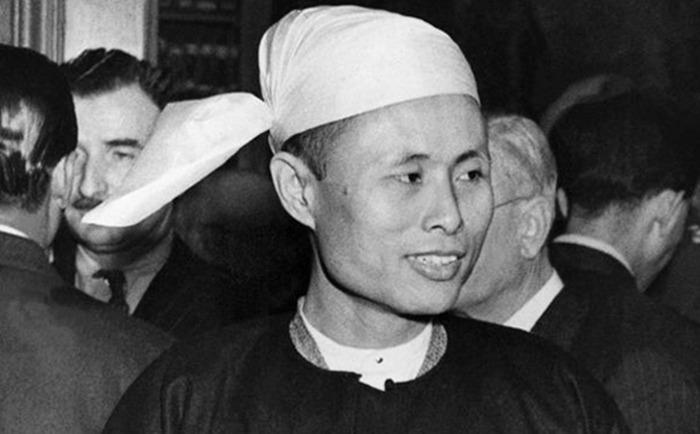
General Aung San is universally regarded as the founding father of modern Myanmar and the most influential leader in the country’s struggle for independence from British colonial rule. A revolutionary nationalist, military organizer, and political visionary, he laid the foundations for an independent, unified Burma before his assassination in 1947, just months before independence was achieved.
Although he never ruled the independent state he helped create, Aung San’s ideas on national unity, federalism, and civilian governance continue to shape Myanmar’s political discourse. His legacy transcends ideology, ethnicity, and party politics, making him one of the most revered figures in Myanmar history.
Early Life and Education
Aung San was born on 13 February 1915 in Natmauk, Magway Region, in British Burma. He grew up during a period of rising anti-colonial sentiment, which deeply influenced his political consciousness.
He attended Rangoon University, where he emerged as a prominent student activist. As editor of the student magazine and a leader in university strikes, Aung San developed a reputation for intellectual rigor, discipline, and uncompromising nationalism.
His university years marked the beginning of his lifelong commitment to ending colonial rule and building a sovereign Burmese state.
Entry Into Nationalist Politics
The Dobama Asiayone Movement
Aung San became a leading figure in the Dobama Asiayone (We Burmans Association), adopting the title Thakin—a term used by Burmese nationalists to assert that they, not the British, were the true masters of the country.
Through speeches, writings, and organizing, he mobilized young Burmese intellectuals and workers around the goal of independence.
Founding the Communist Party of Burma
In 1939, Aung San helped found the Communist Party of Burma (CPB). Although he later distanced himself from strict ideological communism, the party reflected his belief in anti-imperial solidarity and mass political mobilization.
Military Leadership and World War II
Formation of the Burma Independence Army
In 1941, Aung San secretly traveled abroad to seek support for independence. With foreign assistance, he helped establish the Burma Independence Army (BIA), which later evolved into the Burma National Army (BNA).
Initially aligned with Axis powers to expel British colonial forces, Aung San later recognized the dangers of foreign domination and authoritarianism.
Switching Sides and the Anti-Fascist Resistance
In 1945, Aung San led the BNA in switching allegiance to the Allied forces, playing a crucial role in defeating fascism in Burma. This decision solidified his reputation as a strategic nationalist leader who prioritized Burma’s long-term sovereignty over short-term alliances.
Architect of Independence
Negotiations With Britain
After World War II, Aung San emerged as the central figure in negotiations with the British government. His leadership resulted in agreements that paved the way for Burma’s independence.
He served as Deputy Chairman of the Executive Council, effectively acting as prime minister-designate of an independent Burma.
The Panglong Agreement
One of Aung San’s most enduring achievements was the Panglong Agreement of 1947, which brought together leaders of major ethnic nationalities—Shan, Kachin, and Chin—under a shared vision of a federal union.
The agreement promised:
Equality among ethnic groups
Autonomy within a united Burma
Shared political participation
This vision remains a cornerstone of modern debates on federalism in Myanmar.
Vision for a New Nation
Aung San envisioned a Burma that was:
Independent and sovereign
Democratic and civilian-led
Federal and inclusive
Socially just and economically balanced
He opposed military dominance in politics and emphasized the importance of civilian control of the armed forces—a principle often cited by later reformers and opposition movements.
Assassination and National Tragedy
On 19 July 1947, Aung San and several members of his interim government were assassinated during a cabinet meeting in Yangon.
The killings shocked the nation and permanently altered Burma’s political trajectory. Independence was achieved on 4 January 1948, but without the leader most capable of guiding the fragile new state.
19 July is commemorated annually as Martyrs’ Day in Myanmar.
Family and Personal Legacy
Aung San was married to Daw Khin Kyi, a respected political figure in her own right. Their daughter, Aung San Suu Kyi, later became Myanmar’s most prominent pro-democracy leader, further extending the family’s political legacy.
Despite political controversies surrounding later eras, General Aung San’s personal reputation remains largely untarnished and widely respected across generations.
Legacy and Historical Significance
General Aung San’s influence extends far beyond his lifetime:
Founder of the modern Burmese military
Principal architect of independence
Symbol of national unity
Advocate of federal democracy
He is honored with statues, institutions, currency images, and national remembrance ceremonies throughout Myanmar.
Why General Aung San Still Matters Today
Understanding General Aung San is essential to understanding:
Myanmar’s unresolved federal question
Civil-military relations
The roots of modern Burmese nationalism
His unfinished vision continues to inspire political movements across ideological lines.
❓ Frequently Asked Questions (FAQ)
1. Who was General Aung San?
General Aung San was Myanmar’s independence leader and founding father who led the struggle against colonial rule.
2. Why is Aung San called the founding father of Myanmar?
He negotiated independence, united ethnic groups, and shaped the vision for a modern Burmese state.
3. What was the Panglong Agreement?
It was a 1947 agreement promising equality and autonomy for ethnic groups within a united Burma.
4. How did General Aung San die?
He was assassinated on 19 July 1947 during a cabinet meeting in Yangon.
5. Is Aung San related to Aung San Suu Kyi?
Yes. He was her father.
6. When did Myanmar gain independence?
Myanmar became independent on 4 January 1948.