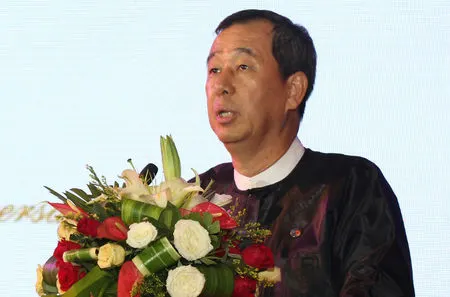
Steven Law (Tun Myint Naing): Myanmar Business Tycoon and Asia World Leader
Steven Law, also known by his Burmese name Tun Myint Naing, is one of Myanmar’s most powerful and controversial business figures. As the head of the Asia World Company, Myanmar’s largest infrastructure conglomerate, he has played a decisive role in shaping the country’s ports, roads, industrial zones, and logistics networks over several decades.
His career illustrates the deep entanglement between business, state power, and military rule in Myanmar’s modern political economy. Admired by supporters for his role in national infrastructure development and criticized by opponents for his political connections and international sanctions, Steven Law remains a central figure in discussions about elite capitalism in Myanmar.
Early Life and Family Background
Steven Law was born in 1969 in Myanmar. He is the son of Lo Hsing Han, a powerful figure who transitioned from insurgent leader to government-aligned businessman during Myanmar’s military era. This family background significantly shaped Steven Law’s early exposure to commerce, logistics, and political networks.
Growing up within this environment, Steven Law developed a practical understanding of trade, transport, and regional commerce—sectors that would later form the backbone of Asia World’s business empire.
Entry Into Business
Steven Law entered business during Myanmar’s period of economic isolation, when state-linked private firms were relied upon to undertake large-scale development projects that foreign companies were unable or unwilling to pursue due to sanctions.
He gradually assumed leadership roles within family-linked enterprises and later consolidated operations under the Asia World Company, positioning it as a national infrastructure partner.
Asia World Company
Overview and Scale
Asia World grew into Myanmar’s largest conglomerate by revenue, with operations spanning:
Port operations and maritime logistics
Road and bridge construction
Industrial zones and special economic areas
Energy and power generation
Real estate and urban development
The company became especially prominent through its role in port management, including Yangon port facilities that are vital to Myanmar’s trade.
Infrastructure and National Development Role
Strategic Projects
Asia World played a leading role in developing:
Major highways connecting economic corridors
Deep-sea and river ports
Industrial estates supporting export industries
Supporters argue that Asia World filled a critical infrastructure gap at a time when Myanmar lacked international investment and technical capacity.
Critics contend that the scale of these projects was made possible primarily through preferential access to state contracts rather than open competition.
Relationship With Military Governments
Steven Law is widely known for his close relationship with successive military governments. Asia World’s expansion closely paralleled periods of strong military control over the economy.
These relationships provided:
Long-term project stability
Access to strategic land and concessions
Protection from domestic competition
At the same time, they placed Steven Law at the center of international scrutiny and debate over crony capitalism in Myanmar.
International Sanctions and Global Scrutiny
Sanctions Era
Steven Law and Asia World were subjected to international sanctions, particularly by the United States, due to concerns about:
Political connections
Alleged illicit financial activities
Lack of transparency
Sanctions limited his ability to operate internationally, restricting:
Access to global banking systems
Overseas investment
Partnerships with multinational firms
Adaptation to Sanctions
Despite these constraints, Asia World continued to operate domestically, adapting its business model to:
Focus on local and regional projects
Utilize domestic financing channels
Maintain close coordination with state authorities
This resilience reinforced Steven Law’s reputation as a dominant domestic business figure.
Role During Myanmar’s Reform Period
During Myanmar’s reform era (2011–2020), Asia World adjusted to a more competitive environment:
Partial opening to foreign investment
Increased regulatory scrutiny
Growing public attention to corporate governance
Although some sanctions were eased during this period, Asia World remained cautious in expanding internationally, reflecting lingering reputational and regulatory risks.
Post-2021 Political Environment
Myanmar’s political crisis after 2021 reshaped the business landscape once again. Infrastructure firms with domestic focus and state ties were better positioned to continue operations amid renewed sanctions and capital flight.
For Steven Law and Asia World, this environment:
Reinforced reliance on domestic projects
Reduced exposure to international markets
Renewed global attention on elite business networks
Public Profile and Media Presence
Steven Law maintains a low public profile, rarely giving interviews or making public statements. His influence is exercised primarily through corporate channels rather than political or social advocacy.
This discretion has contributed to both mystique and criticism, as transparency remains a central issue in assessments of his role.
Legacy and Historical Assessment
Steven Law’s legacy is one of scale, power, and controversy.
Supporters Highlight:
Infrastructure development
Port modernization
Employment generation
National logistics capacity
Critics Highlight:
Political favoritism
Concentration of economic power
Weak transparency and accountability
Despite differing views, his impact on Myanmar’s infrastructure landscape is undeniable.
Why Steven Law Matters Today
Understanding Steven Law is essential to understanding:
How infrastructure power shapes political economy
The role of conglomerates under military rule
The limits of reform in elite-dominated systems
His career serves as a case study in how business success can be deeply intertwined with state authority.
❓ Frequently Asked Questions (FAQ)
1. Who is Steven Law?
Steven Law, also known as Tun Myint Naing, is a Myanmar business tycoon and head of Asia World Company.
2. What is Asia World?
Asia World is Myanmar’s largest infrastructure conglomerate involved in ports, roads, energy, and industrial zones.
3. Why is Steven Law controversial?
He is controversial due to close ties with military governments and past international sanctions.
4. Was Steven Law sanctioned internationally?
Yes. He and Asia World were subject to U.S. sanctions during Myanmar’s military rule.
5. Is Steven Law involved in politics?
He is not a politician but is closely linked to political authorities through business operations.
6. What is Steven Law’s significance in Myanmar?
He is a key figure in understanding Myanmar’s infrastructure development and elite capitalism.