Zawgyi: Influential Burmese Poet and Literary Figure
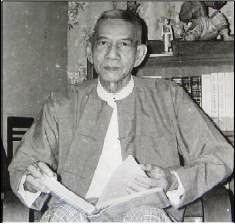
Zawgyi is recognized as one of the most important poets in modern Burmese literature. As a poet, writer, and literary innovator, he played a central role in transforming Burmese poetry during the 20th century, helping it evolve from classical forms into a more modern, expressive, and personal style. His work influenced generations of writers and remains a cornerstone of Myanmar’s literary canon.
Known for his emotional sensitivity, linguistic experimentation, and intellectual depth, Zawgyi’s contributions extended beyond poetry to broader cultural and literary discourse.
Early Life and Background
Zawgyi was born in 1907 in British Burma. His birth name was U Thein Han, though he became widely known by his pen name Zawgyi, a reference to a mythical alchemist in Burmese folklore—symbolizing transformation and creative power.
He received a strong education in Burmese language and literature and later studied at Rangoon University, where he was exposed to both traditional Burmese texts and modern literary ideas.
Literary Beginnings
Zawgyi began writing poetry during his university years, quickly gaining attention for his innovative approach. Unlike classical poets who strictly followed traditional meters and themes, Zawgyi experimented with:
Free verse
Modern imagery
Personal emotion
This departure from convention marked the beginning of a new literary era in Burmese poetry.
Modernization of Burmese Poetry
Literary Style and Innovation
Zawgyi’s poetry is distinguished by:
Emotional intensity
Psychological depth
Natural imagery
Conversational tone
He believed poetry should reflect individual experience and emotional truth, not just formal elegance. This philosophy challenged older literary norms and opened new possibilities for poetic expression.
Themes and Subject Matter
Common themes in Zawgyi’s work include:
Love and longing
Nature and beauty
Solitude and introspection
Human vulnerability
Rather than overt political messages, his poems explored inner life and emotional landscapes, making them relatable across generations.
Role in Literary Movements
Zawgyi was closely associated with Myanmar’s modernist literary movement, which sought to adapt global literary trends to local language and culture. He contributed to literary journals and participated in intellectual circles that debated:
Tradition versus modernity
Form versus freedom
Art’s role in society
His ideas helped define the direction of modern Burmese literature.
Influence on Later Writers
Zawgyi’s work inspired many younger poets and writers, including figures who would later become literary leaders in their own right. His emphasis on authenticity encouraged writers to:
Experiment with form
Explore personal themes
Develop individual voices
Today, his influence is evident in contemporary Burmese poetry and creative writing.
Academic and Literary Roles
Beyond writing, Zawgyi was involved in education and literary criticism. He lectured on literature and contributed essays that analyzed poetic form and artistic responsibility.
Through teaching and mentorship, he helped institutionalize modern literary standards in Myanmar.
Later Life and Recognition
Throughout his later years, Zawgyi remained an admired cultural figure. His works were widely published, studied, and recited in schools and universities.
He received numerous literary honors, reflecting his lasting contribution to Myanmar’s cultural life.
Death and Enduring Legacy
Zawgyi passed away in 1998, leaving behind a rich body of work that continues to influence Myanmar’s literary tradition.
He is remembered as:
A pioneer of modern Burmese poetry
A cultural innovator
A bridge between tradition and modern expression
Cultural and Historical Significance
Zawgyi’s significance lies in his ability to:
Transform poetic language
Expand emotional and artistic boundaries
Shape modern literary identity
Few poets have had such a profound impact on Myanmar’s cultural evolution.
Why Zawgyi Matters Today
Understanding Zawgyi helps readers appreciate:
The modernization of Burmese literature
The role of individual creativity in cultural change
How literature adapts across generations
His work demonstrates that literary innovation can preserve cultural depth while embracing new forms.
❓ Frequently Asked Questions (FAQ)
1. Who was Zawgyi?
Zawgyi was a Burmese poet and literary figure known for modernizing Burmese poetry.
2. What was Zawgyi’s real name?
His birth name was U Thein Han.
3. Why is Zawgyi important in Myanmar literature?
He helped transition Burmese poetry from classical to modern forms.
4. What themes did Zawgyi explore?
Love, emotion, nature, introspection, and human experience.
5. Was Zawgyi involved in politics?
No. He focused primarily on literary and cultural expression.
6. How is Zawgyi remembered today?
As a pioneering poet whose influence continues in modern Burmese literature.