
Bipartisan U.S. Lawmakers Urge Trump to Reject Myanmar’s Upcoming Elections
A group of bipartisan lawmakers in Washington is urging President Donald Trump to reject the upcoming elections in Myanmar. They argue that the military junta plans to use the December 28 vote to present itself as legitimate after seizing power in 2021.
The call came in a joint statement from senior members of the House and Senate Foreign Affairs Committees. They asked the Trump administration to clearly oppose the election and to speak out before the results are announced. The lawmakers said the junta has shaped the election to guarantee its own power, while restricting opposition parties and silencing critics.
Lawmakers Warn the Election Is Not Democratic
The statement describes the election as a “manufactured” political process. According to the lawmakers, the junta is “trying to deceive the international community” by pretending to offer a democratic choice. They said the vote does not correct the violations that began when the military took control nearly four years ago.
“Orchestrated by the military junta to deceive the international community, these elections are designed to manufacture legitimacy for the China-backed junta after its 2021 coup and ongoing campaign of violence against the Burmese people,” the statement read.
The lawmakers urged the Trump administration and democratic allies to condemn the polls. “Any election that denies the Burmese people their right to freely and fairly choose their government must be rejected,” they said.
Background: The 2021 Coup and Its Consequences
Myanmar has faced political crisis since the military seized power on February 1, 2021. Soldiers arrested civilian leaders and claimed that the 2020 general election was fraudulent. No independent observers supported that claim. The National League for Democracy, led by Aung San Suu Kyi, won the 2020 election by a wide margin.
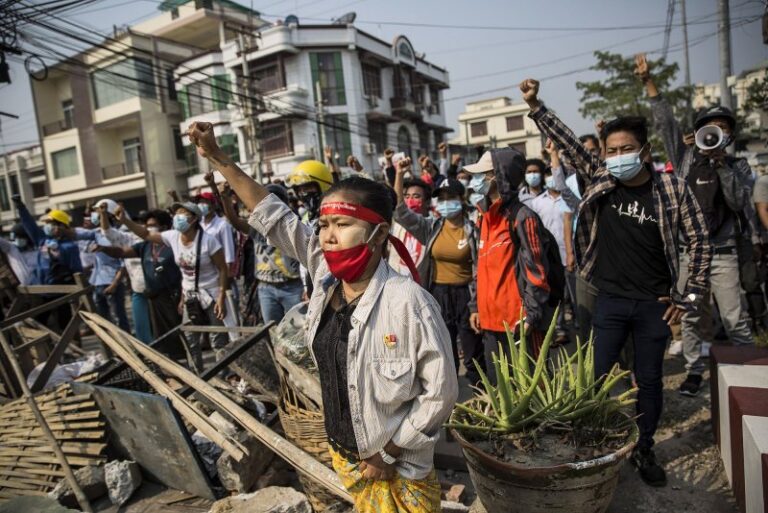
After the coup, millions protested across the country. Security forces responded with arrests, violence, and military operations. Many elected officials remain in prison or under house arrest. Human rights organizations continue to document torture, displacement, and attacks on civilian communities.
Civil conflict has expanded since 2021. Armed groups formed in several regions. Fighting intensified in ethnic minority areas. Internet shutdowns, military blockades, and travel restrictions have made basic life difficult for millions.
Elections Under Tight Military Control
The lawmakers pointed to actions taken in 2023 as proof that the election will not be competitive. That year, the junta dissolved dozens of political parties that failed to meet new registration requirements. The banned parties include the National League for Democracy, which won both the 2015 and 2020 elections.
Only parties approved by the military can participate. The Union Solidarity and Development Party, which has long ties to the armed forces, remains one of the main parties allowed on the ballot. Many opposition politicians are in jail, in hiding, or living abroad. Large parts of the population cannot campaign, assemble, or speak freely.
The statement said these conditions make a fair contest impossible. Without access to candidates, information, or safe voting, most citizens cannot express their preferences.
Bipartisan Unity in Washington
The message was issued by four senior members of Congress.
Rep. Brian Mast (R-Mich.)
Rep. Gregory Meeks (D-N.Y.)
Sen. James Risch (R-Idaho)
Sen. Jeanne Shaheen (D-N.H.)
Mast and Meeks serve as the top Republican and Democrat on the House Foreign Affairs Committee. Risch and Shaheen hold the same leadership positions on the Senate Foreign Relations Committee. Their cooperation is notable, given how divided U.S. politics often is. On Myanmar, however, the lawmakers agree that the United States must defend democratic principles.
They called the December election “an electoral farce.” They said Washington should set an example for other countries by refusing to accept the results. They also raised concerns that China continues to support the junta and benefits from instability in Myanmar.
International Response and Broader Concerns
Myanmar’s military leaders defend the election. They claim that political restrictions are necessary for security. They insist the process will follow the law and lead to stability. They accuse foreign governments of interfering in domestic affairs.
The international community remains divided. Western countries, including the United States, Canada, and members of the European Union, have issued sanctions against military figures and state-owned businesses. Several governments have cut direct engagement with the junta.
Within Southeast Asia, reactions have been mixed. ASEAN has struggled to reach a unified position. Some member states maintain contact with the military government. Others reject it and support engagement with pro-democracy forces. The United Nations has called for political compromise and humanitarian access, but progress has been slow.
For ordinary people in Myanmar, the political debate affects daily life. Armed conflict has displaced millions. Access to healthcare, food, and basic services has collapsed in many areas. Even if the election proceeds, many citizens will not be able to vote safely, travel freely, or participate in campaign discussions.
What Comes Next
The lawmakers’ appeal does not guarantee a formal response from President Trump. However, the statement signals that Myanmar remains a high-level concern in Washington. It also shows that attitudes toward the junta extend beyond party lines. Members of Congress from both sides believe the United States should not support political processes that deny basic rights.
For now, Myanmar moves toward an election that many expect to reinforce the military’s hold on power. Whether other nations will accept the outcome remains an open question.
Frequently Asked Questions (FAQ)
1. Why are U.S. lawmakers asking Trump to reject Myanmar’s election?
They believe the military junta is controlling the process. They argue the vote will not allow real participation and will only strengthen military rule.
2. Who signed the statement?
Rep. Brian Mast, Rep. Gregory Meeks, Sen. James Risch, and Sen. Jeanne Shaheen. They serve as the leaders of the House and Senate foreign affairs committees.
3. What happened in Myanmar in 2021?
The military took power in a coup, detained elected leaders, and overturned the results of the 2020 election. That move triggered nationwide protests and armed resistance.
4. Why is the December election controversial?
Opposition parties, including the National League for Democracy, were dissolved. Many political figures remain jailed or in exile. Large parts of the country are unstable.
5. What does rejecting the election mean?
It means the United States would refuse to recognize the results. It would send a political message that the election does not represent the people’s will or international democratic standards.
Related posts:
 Dr. Sasa Resigns from NUG, Restructuring Expected Inside Shadow Government
 Starlink Fuels Myanmar Scam Networks, U.S. Demands Geoblock
 LACK OF INTERNATIONAL RESPONSE TO BURMA JUNTA’S ATTACKS ON CIVILIAN POPULATION
 ASEAN Rejects Myanmar’s Military Elections, Illegitimate
 𝗛𝗼𝘄 𝗠𝘆𝗮𝗻𝗺𝗮𝗿’𝘀 𝗖𝘆𝗯𝗲𝗿-𝗦𝗹𝗮𝘃𝗲𝗿𝘆 𝗡𝗲𝘁𝘄𝗼𝗿𝗸𝘀 𝗘𝘅𝗽𝗹𝗼𝗶𝘁 𝗬𝗼𝘂𝗻𝗴 𝗔𝗳𝗿𝗶𝗰𝗮𝗻𝘀 𝗔 𝗡𝗲𝘄 𝗣𝗵𝗮𝘀𝗲 𝗼𝗳 𝗮𝗻 𝗘𝘅𝗽𝗮𝗻𝗱𝗶𝗻𝗴 𝗖𝗿𝗶𝘀𝗶𝘀
 THE ‘GERMAN CONNECTION’ IN MYANMAR’S CIVIL WARS