
Myanmar Hands Over Drug Fugitives to Thailand in Joint Crackdown
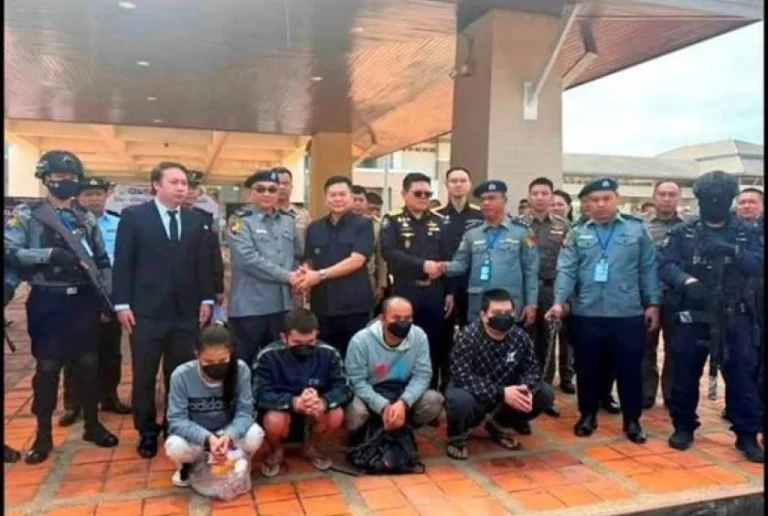
Myanmar authorities have handed over three drug-related fugitives wanted by Thailand, along with one Thai national who lived illegally in Myanmar. The transfer followed close cooperation between the two countries under a bilateral drug control agreement.
The Myanmar Police Force confirmed the handover took place on December 11. Officials said the operation followed the Memorandum of Understanding (MoU) on Myanmar–Thailand cooperation in narcotics control. The case highlights growing cross-border coordination against drug trafficking in the region.
Arrests in Border Townships
Police arrested the suspects in Tachileik and Mongton townships. Both locations sit near the Myanmar–Thailand border. The area has long faced challenges linked to drug trafficking and cross-border crime.
After their arrest, authorities transferred the suspects to Thai officials through formal legal procedures. Officials said both sides followed existing laws and agreements.
The three fugitives faced drug-related charges in Thailand. The fourth individual was a Thai national who resided illegally in Myanmar.
Fugitives Wanted by Thailand
Thai authorities had issued warrants for the three suspects due to drug crimes committed inside Thailand. After committing the offenses, the suspects fled across the border into Myanmar.
The fugitives were identified as:
Phonchana Phongthong, also known as Toon
Thanida Puangngern, also known as Ning
*Wi Rat Taou Dom
The fourth person, Chairit Phucharoen, was a Thai national without legal residence in Myanmar. Authorities arrested him earlier in Yan Aung Myay Ward, Tachileik, on September 16.
Intelligence Sharing Led to Arrests
Thailand’s Office of the Narcotics Control Board (ONCB) shared intelligence with Myanmar’s Central Committee for Drug Abuse Control (CCDAC). The intelligence included information on suspects who committed drug crimes in Thailand and then fled to Myanmar.
After receiving the request, Myanmar authorities acted quickly. A joint team formed to investigate the suspects’ whereabouts.
The team included officers from:
Myanmar Anti-Narcotics Police Force
Shan State Police
The cooperation allowed police to track and arrest all four individuals without major incidents.
Formal Handover Under Bilateral Agreement
The handover followed the MoU on Joint Drug Control between Myanmar and Thailand. Officials from both countries attended the transfer.
A Thai delegation led by Pol Maj Suriya Singhakamol, Secretary General, represented Thailand’s narcotics control authorities. The Myanmar side transferred custody according to agreed procedures.
Officials emphasized that the handover respected legal frameworks in both countries. The process followed international standards for cross-border law enforcement cooperation.
Longstanding Cooperation on Drug Control
Myanmar and Thailand have worked together on drug control for many years. Both countries face serious challenges from drug production, trafficking, and organized crime networks operating across borders.
Under the bilateral drug control program, both sides commit to:
Share intelligence on drug crimes
Track fugitives who cross borders
Arrest suspects under national laws
Transfer custody through formal channels
Officials said the program aims to prevent fugitives from using borders as safe havens.
Border Areas Remain High-Risk Zones
Tachileik and Mongton sit along known trafficking routes. Criminal groups often exploit rugged terrain and porous borders to move drugs and evade arrest.
Authorities in both countries recognize these risks. Joint operations aim to disrupt trafficking routes and prevent repeat offenses.
Officials said arrests like this send a strong message to criminal networks. Borders will not protect fugitives from justice.
Myanmar Reaffirms Drug Control as National Duty
The Myanmar Police Force said drug prevention and suppression remain a national responsibility. Authorities continue to expand enforcement efforts despite difficult conditions.
Officials stressed that cooperation with neighboring and regional countries strengthens results. Shared intelligence and coordinated arrests increase effectiveness.
Myanmar has pledged to deepen collaboration with regional partners to address drug-related crimes more efficiently.
Regional Impact and Security Implications
Drug trafficking affects more than law enforcement. It impacts public health, border security, and regional stability.
Officials said joint crackdowns help reduce:
Drug circulation in border communities
Cross-border criminal networks
Repeat offenses by known traffickers
Thailand and Myanmar both view cooperation as essential for long-term security.
Legal Process and Next Steps
After the handover, Thai authorities assumed responsibility for legal proceedings. The suspects will face charges under Thai law.
Officials did not release further details about court proceedings. They cited ongoing investigations and legal protocols.
Authorities confirmed that similar cooperation will continue in future cases.
Conclusion
The handover of three drug fugitives and one illegal resident reflects closer law enforcement ties between Myanmar and Thailand. Intelligence sharing, joint investigations, and legal coordination made the operation possible.
Officials said such cooperation sends a clear signal. Borders will not shield drug offenders from accountability.
As drug trafficking networks adapt, regional cooperation remains critical. Myanmar and Thailand say they will continue working together to protect communities and uphold the rule of law.
FAQs
Why did Myanmar hand over the fugitives to Thailand?
Thailand wanted the suspects for drug crimes committed inside its territory. Myanmar acted under a bilateral drug control agreement.
Where were the suspects arrested?
Police arrested them in Tachileik and Mongton townships near the Myanmar–Thailand border.
Who carried out the arrests?
A joint team from Myanmar’s Anti-Narcotics Police Force and Shan State Police conducted the arrests.
What agreement governs this cooperation?
The Memorandum of Understanding on Joint Drug Control between Myanmar and Thailand.
Will Myanmar continue similar operations?
Yes. Authorities say they will expand cooperation with neighboring countries to improve drug control efforts.
Related posts:
 Alleged India–KIA Rare Earth Deal Raises Myanmar Concerns
 Myanmar National Unity Government 2025 Faces Calls for Reform
 Myanmar Satellite Data Reveal Rare Earth Mining Deforestation
 Myanmar Opium Poppy Farming Surges Amid Conflict
 East Timor’s ASEAN Gamble: Mending Ties with Myanmar Junta
 China Executes 5 from Myanmar Scam Gang in Fraud Crackdown