
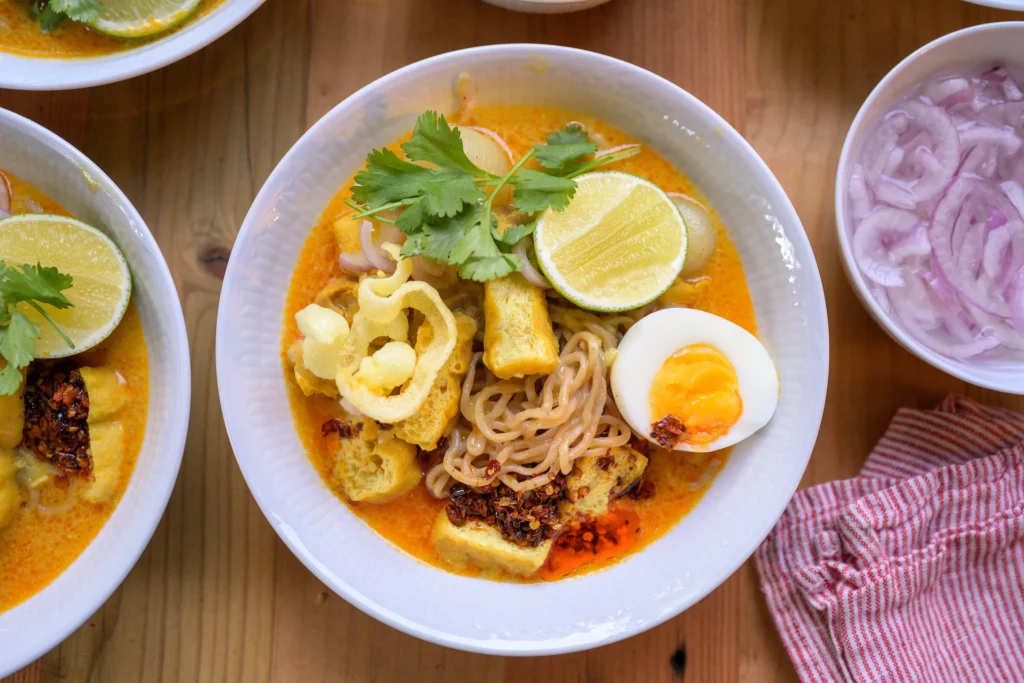
Shan Noodles
Shan Noodles, locally known as Shan Khauk Swè, are among the most popular and widely enjoyed noodle dishes in Myanmar. Originating in Shan State, this dish offers a lighter, fresher alternative to richer noodle soups like Ohn No Khao Swè. With soft rice or wheat noodles, a mildly savory tomato-based sauce, and simple yet satisfying toppings, Shan Noodles appeal to people of all ages.
Teashops, street stalls, markets, and family kitchens across Myanmar serve Shan Noodles daily. Many diners choose them for breakfast or lunch, but their light nature makes them suitable at any time of day.
What Are Shan Noodles?
Shan Noodles consist of noodles topped with a seasoned tomato and meat sauce, often made with chicken or pork, and finished with fresh herbs, peanuts, and chili oil. Cooks usually serve them dry with minimal broth, though some variations include a light soup on the side.
Unlike heavier curries or coconut-based dishes, Shan Noodles focus on balance and clarity of flavor. The dish highlights gentle sweetness from tomatoes, savory depth from meat, and freshness from herbs.
Origins in Shan State
Shan State lies in eastern Myanmar and borders Thailand, Laos, and China. The region’s cuisine reflects centuries of trade, migration, and cultural exchange. Shan cooking often favors:
Mild seasoning
Fresh ingredients
Light sauces
Simple preparation
Shan Noodles reflect this philosophy. Families developed recipes that relied on accessible ingredients while delivering satisfying meals. Over time, the dish spread nationwide and became a staple far beyond Shan State.
Key Ingredients
Noodles
Shan Noodles use either rice noodles or thin wheat noodles, depending on local preference. Both absorb sauce well and maintain a soft, smooth texture.
Tomato-Based Sauce
The sauce forms the heart of the dish. Cooks simmer tomatoes with garlic, onions, and oil until they create a lightly sweet and savory base.
Protein
Chicken (most common)
Pork (popular in some regions)
Vegetarian versions using tofu or mushrooms
Toppings and Garnishes
Crushed peanuts
Chopped scallions
Fresh coriander
Chili oil
Pickled mustard greens (optional)
Each topping adds contrast and texture.
How Shan Noodles Are Served
Cooks typically serve Shan Noodles dry, with sauce mixed directly into the noodles. Some teashops add a small bowl of clear broth on the side.
Diners often customize their bowl by:
Adding chili oil for heat
Sprinkling extra peanuts for crunch
Adjusting salt or lime to taste
This customization makes Shan Noodles highly personal and adaptable.
Flavor Profile
Shan Noodles deliver:
Light sweetness from tomatoes
Gentle savoriness from meat and aromatics
Freshness from herbs
Crunch from peanuts
Optional heat from chili oil
The dish avoids heavy spice and strong oiliness, making it easy to eat regularly.
Dry Shan Noodles vs. Shan Noodle Salad
Dry Shan Noodles
Warm noodles
Light tomato sauce
Minimal broth
Shan Noodle Salad
Room-temperature noodles
Added lime juice
Brighter, tangier taste
Both versions remain popular, especially during hot weather.
Shan Noodles vs. Other Myanmar Noodles
Compared to Mohinga
Shan Noodles use tomatoes instead of fish broth
Served mostly dry rather than as soup
Lighter and less aromatic
Compared to Ohn No Khao Swè
No coconut milk
Much lighter texture
Less richness, more freshness
Together, these dishes show the diversity of Myanmar noodle culture.
Cultural Role in Daily Life
Shan Noodles play a strong role in everyday dining. Students, office workers, and families choose them for quick, affordable meals. Teashops often list Shan Noodles as a core item, and many people associate the dish with casual conversations and social gatherings.
Because the ingredients are flexible, families adapt recipes based on availability and taste preferences.
Modern and Regional Variations
Traditional Shan Style
Mild seasoning
Minimal oil
Balanced flavors
Street-Style Versions
Extra chili oil
Stronger garlic aroma
Heavier sauce
Vegetarian Adaptations
Tofu or mushrooms
Soy-based seasoning
Same tomato base
Why Shan Noodles Matter
Shan Noodles represent simplicity, balance, and accessibility. They show how Myanmar cuisine values clarity of flavor over excess. The dish connects regions, generations, and communities through shared comfort and familiarity.
Frequently Asked Questions (FAQ)
What are Shan Noodles?
Shan Noodles are a traditional Myanmar noodle dish from Shan State, made with rice or wheat noodles topped with a light tomato-based sauce, meat, and fresh garnishes.
Are Shan Noodles spicy?
Shan Noodles are usually mild. Chili oil is added separately so diners can control the heat.
Are Shan Noodles served as soup or dry?
They are most often served dry, sometimes with a small bowl of clear broth on the side.
What meat is used in Shan Noodles?
Chicken is the most common protein, though pork and vegetarian versions are also popular.
Can Shan Noodles be vegetarian?
Yes. Vegetarian Shan Noodles use tofu or mushrooms instead of meat and maintain the same tomato-based sauce.
When are Shan Noodles eaten in Myanmar?
People eat Shan Noodles throughout the day, especially for breakfast and lunch.