
Myanmar Food Guide: 15 Traditional Burmese Dishes You Should Try
Myanmar cuisine is one of Southeast Asia’s most distinctive and diverse food traditions.
Influenced by the country’s many ethnic communities, neighboring India, China and Thailand, Burmese food combines rice, noodles, fresh herbs, fermented ingredients, curries, soups and salads in ways that are uniquely Myanmar.
Food also plays an important role in everyday social life. Families share meals together, tea shops are popular gathering places, and markets are filled with snacks, noodles, curries and freshly prepared dishes throughout the day.
If you are new to Burmese cuisine, these 15 traditional dishes are a great place to start.
1. Mohinga
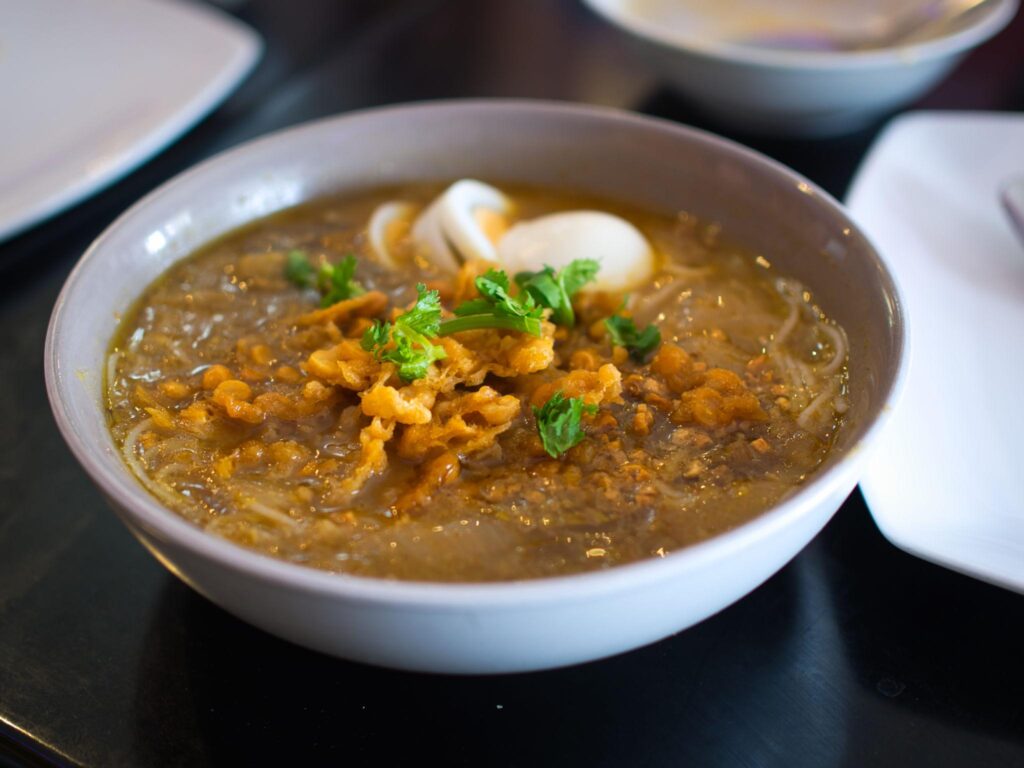
Mohinga is often considered Myanmar’s national dish.
It is a rice-noodle soup traditionally served with a flavorful fish-based broth made with ingredients such as lemongrass, onions, garlic and spices.
Depending on the region and cook, it may also include banana stem, boiled egg, crispy fritters or other toppings.
Although mohinga is traditionally associated with breakfast, many people eat it at any time of day.
For many Burmese people, a hot bowl of mohinga is one of the most familiar tastes of home.
2. Laphet Thoke — Tea Leaf Salad
Laphet thoke is one of Myanmar’s most famous dishes.
The salad is made with fermented tea leaves mixed with ingredients such as cabbage, tomatoes, garlic, chilies, sesame seeds, peanuts and crunchy fried beans.
The combination of flavors and textures is unusual: slightly bitter tea leaves, fresh vegetables and crispy toppings all come together in one dish.
Tea in Myanmar is not only something people drink. Fermented tea leaves have also been part of Burmese food culture for generations.
3. Shan Noodles
Shan noodles originate from Shan State but are now popular throughout Myanmar.
They are typically made with rice noodles and served with chicken or pork, tomato-based sauce, garlic, chili and other seasonings.
Some versions are served with broth, while others are served relatively dry.
Pickled vegetables or mustard greens are often served on the side.
Shan noodles are simple, flavorful and one of the easiest Burmese dishes for first-time visitors to enjoy.
4. Ohn No Khao Swe — Coconut Chicken Noodles
Ohn no khao swe is a rich noodle dish made with coconut milk and chicken.
It is usually served over noodles and topped with ingredients such as boiled egg, onions, crispy noodles, chili and lime.
The creamy broth gives the dish a very different flavor from mohinga.
It is comforting, filling and particularly popular with people who enjoy mild curry flavors.
5. Burmese Curry
A traditional Burmese meal often includes curry served with rice and several side dishes.
Burmese curries may contain chicken, pork, beef, fish, shrimp or vegetables.
Compared with some neighboring cuisines, the seasoning is often less dominated by coconut milk and may feature onions, garlic, turmeric, ginger and oil.
The curry itself is only one part of the meal.
It may be accompanied by soup, vegetables, fresh herbs, chili paste and small side dishes.
6. Nan Gyi Thoke
Nan gyi thoke is a popular noodle salad made with thick rice noodles.
The noodles are commonly mixed with chicken curry, chickpea flour, onions, chili oil, lime and other seasonings.
Boiled egg and crispy toppings may also be added.
Because it is served as a salad rather than a soup, nan gyi thoke has a rich, concentrated flavor.
It is a popular breakfast or lunch dish and can be found in many parts of Myanmar.
7. Mont Hin Gar
Mont hin gar is another name often associated with mohinga, particularly in Burmese everyday speech.
Different regions and families prepare the dish in different ways.
Some broths are light, while others are thicker and more strongly seasoned.
Toppings also vary considerably.
Trying mohinga from several cities or street vendors is a good way to discover how much variety exists within one famous dish.
8. Khao Swe Thoke — Burmese Noodle Salad
Khao swe thoke simply means noodle salad, but there are many variations.
Noodles may be mixed with cabbage, onions, chicken, chili, garlic oil, lime and other ingredients.
Some versions are spicy, while others are mild.
Like many Burmese salads, the balance of sour, salty, spicy and savory flavors is an important part of the dish.
9. Tofu Nway — Warm Shan Tofu
Tofu nway is a specialty associated with Shan cuisine.
Unlike Chinese-style soybean tofu, Shan tofu is often made from chickpea flour or yellow split peas.
Tofu nway is served warm and soft, often with noodles, chili oil, garlic and other seasonings.
It has a smooth texture and comforting flavor.
Travelers exploring Shan State or Shan restaurants elsewhere in Myanmar should look for this dish.
10. Htamin Jin — Shan-Style Rice
Htamin jin is another traditional Shan dish.
Rice is mixed with tomato and other ingredients, shaped into small portions and often served with garlic, chili and side dishes.
Its bright color and simple presentation make it distinctive.
The dish reflects the variety of regional cuisines found throughout Myanmar.
11. Burmese Samosa Salad
Samosas arrived in Myanmar through South Asian culinary influence and eventually became part of local street-food culture.
One popular Burmese preparation turns chopped samosas into a salad or soup-like dish with cabbage, onions, chickpeas, herbs and a flavorful dressing.
It is filling, inexpensive and commonly found at street stalls and small restaurants.
This dish is a good example of how Myanmar cuisine has absorbed outside influences and transformed them into something distinctly local.
12. E Kya Kway
E kya kway is Myanmar’s version of a fried dough stick.
It is similar to Chinese youtiao and is commonly eaten for breakfast.
People often dip it into tea, coffee, mohinga or other soups.
E kya kway is simple but deeply associated with the morning food culture of Myanmar.
It is especially common at tea shops.
13. Mont Lin Ma Yar
Mont lin ma yar is a popular Burmese street snack.
Small round cakes are cooked in a special pan and made from a rice-flour batter.
Depending on the seller, they may contain quail egg, spring onion or other toppings.
The name is sometimes translated as “husband and wife snack” because two halves are often joined together.
Fresh from the pan, they are soft inside with slightly crisp edges.
14. Shwe Yin Aye
Shwe yin aye is a traditional Burmese dessert particularly popular during hot weather.
It usually combines ingredients such as coconut milk, sticky rice, jelly, bread and sago.
Served cold, it is sweet, creamy and refreshing.
It is especially enjoyable during Myanmar’s hot season and is often associated with festivals and family gatherings.
15. Mont Lone Yay Paw
Mont lone yay paw is one of Myanmar’s best-known traditional sweets.
These small glutinous rice balls are usually filled with palm sugar and cooked in boiling water.
They are strongly associated with Thingyan, the Myanmar New Year water festival.
Families and communities often prepare them together and share them with neighbors, friends and visitors.
The dish represents more than food. It is also connected with celebration, generosity and community life.
What Makes Burmese Food Unique?
Myanmar cuisine is difficult to describe with a single flavor.
Different regions have developed their own cooking traditions.
Shan cuisine differs from Rakhine cuisine. Coastal communities use more seafood, while other regions rely more heavily on meat, vegetables, beans and rice.
Several characteristics appear again and again:
Rice and noodles as staple foods
Fermented ingredients
Fresh herbs
Garlic and onions
Chili
Fish and seafood
Beans and pulses
Sour and savory salads
Pickled vegetables
Shared side dishes
Another distinctive part of Burmese food is the importance of salads.
While many countries think of salad mainly as raw vegetables, Myanmar has noodle salads, tea-leaf salad, ginger salad, tomato salad and many other combinations.
Burmese Tea-Shop Culture
Food in Myanmar is closely connected with tea shops.
Traditional tea shops are places to eat breakfast, drink tea, talk with friends, discuss daily life and watch the neighborhood.
Common tea-shop foods include:
E kya kway
Samosas
Noodles
Steamed buns
Flatbreads
Eggs
Sweet milk tea
Tea-shop culture remains an important part of everyday life in many towns and cities.
Regional Diversity of Myanmar Cuisine
Myanmar has more culinary diversity than many visitors initially expect.
Shan State is famous for noodles and tofu dishes.
Rakhine cuisine is known for stronger and spicier flavors.
Central Myanmar has its own curries, snacks and rice dishes.
Mon, Kayin, Kachin, Chin and other ethnic communities also maintain distinctive food traditions.
This means that even after trying the 15 dishes in this guide, there are many more foods to discover.
Final Thoughts
Burmese food tells the story of Myanmar through flavor.
Mohinga reflects everyday breakfast culture. Laphet thoke shows the country’s special relationship with tea. Shan noodles represent regional diversity, while mont lone yay paw connects food with family, festivals and tradition.
For visitors, trying local food is one of the easiest ways to understand Myanmar beyond famous landmarks.
Start with mohinga, laphet thoke and Shan noodles, but do not stop there.
Visit markets, try a neighborhood tea shop, taste regional dishes and ask local people what they recommend.
You may discover that some of your best memories of Myanmar begin with a simple plate of food.
Related News:
 10 Traditional Myanmar Foods Everyone Should Try
 10 Fascinating Things to Know About Myanmar
 Myanmar Culture: Traditions and Customs That Make the Country Unique
 Study Abroad for Myanmar Students: Visa & Costs
Study in Japan for Myanmar Students: Visa & Costs
Embassy Guide for Myanmar Citizens Abroad
Jobs Abroad for Myanmar People: Visa & Salary Guide
 Cultural Tours in Myanmar
Jobs in Japan for Myanmar People: Visa Requirements