Botataung Pagoda: History, Meaning, and the Sacred Relics of Yangon
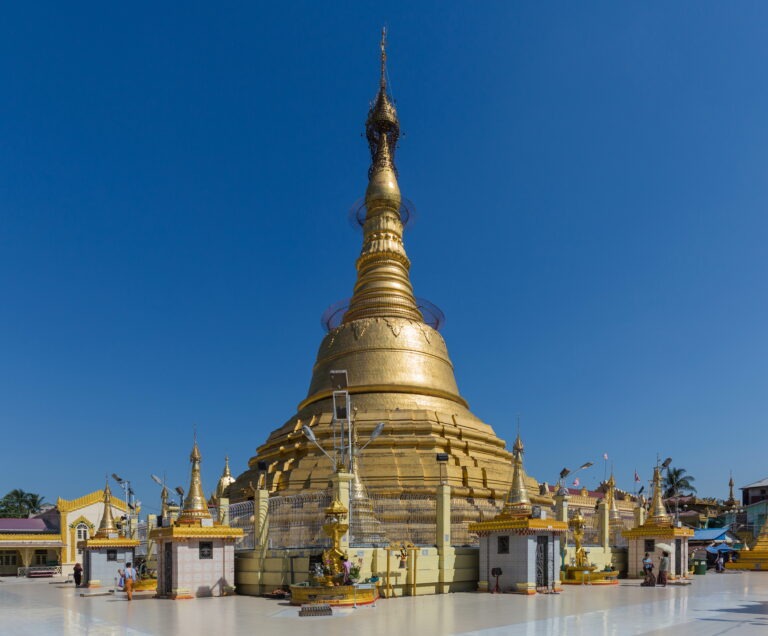
Botataung Pagoda (ဗိုလ်တထောင်ဘုရား) is one of Yangon’s most revered Buddhist landmarks. Located near the banks of the Yangon River and close to the busy Botataung Jetty, the pagoda is renowned for its ancient hair relic of the Buddha and its uniquely accessible hollow interior. Unlike most stupas in Myanmar—where devotees walk around the outside—visitors to Botataung can enter the pagoda itself, moving through corridors lined with gold and glass, witnessing sacred relics and centuries of religious art.
Botataung is not only a religious site but also a cultural symbol reflecting Myanmar’s resilience, historical memory, and deep Buddhist devotion. Its origin stretches back more than 2,000 years, making it one of the oldest religious structures in the country. The story of the “one thousand officers” who escorted the Buddha relics from India gives the pagoda its distinctive name and forever links the temple to the legacy of ancient Buddhist kingdoms.
Origins and Meaning of the Name “Botataung”
Botataung literally translates to “1,000 military officers” or “1,000 leaders”. According to ancient chronicles, when relics of Gautama Buddha were brought to Yangon (then known as Dagon), a procession of one thousand military commanders escorted them to ensure their safe arrival. These commanders formed a ceremonial honor guard, surrounding the relic and accompanying the ritual of enshrinement.
The pagoda was built at that time to house these relics, which made the site immediately sacred. Over time, the name “Botataung” became synonymous with the pagoda, the surrounding area, and even the nearby jetty and roads. The story demonstrates how Burmese society historically honored Buddhist relics with reverence and national pride.
The Buddha Hair Relic: The Heart of Botataung
The central sacred object of Botataung Pagoda is a hair relic of Gautama Buddha. This relic has shaped the identity of the pagoda for centuries.
Unlike Shwedagon or Sule Pagoda—where relics are sealed inside massive stupas—Botataung allows visitors to see the sacred artifacts through glass displays within its hollow core. The relic and associated objects are preserved in a climate-controlled chamber accessible during opening hours.
When the pagoda was excavated for reconstruction after World War II bombings, archeologists and monks rediscovered:
The original hair relic
Stone caskets
Gold and silver artifacts
Terracotta and crystal containers
Ancient votive tablets
Miniature stupas
Jewelry offerings from various dynasties
These discoveries not only confirmed the pagoda’s authentic antiquity but also provided rare insights into early Buddhist relic worship in Lower Myanmar.
A Pagoda Reborn: Destruction and Reconstruction
During World War II, the pagoda was heavily damaged by Allied bombing in 1943. The original structure collapsed, leaving only fragments of its core. This tragedy, while devastating, led to one of the greatest archaeological rediscoveries in Myanmar’s religious history.
When reconstruction began in the late 1940s, engineers and monks unearthed relics that had been sealed for centuries. These discoveries matched textual records, confirming the pagoda’s authenticity and its ancient origins traced to the Mon and Pyu cultural spheres.
The post-war reconstruction project rebuilt the pagoda according to its historical form but innovated in a way that distinguishes it from other stupas: the interior was designed to remain hollow and walkable, allowing worshippers to view relics and artifacts firsthand. This transformed the pagoda into a living museum of Myanmar’s Buddhist heritage.
The Unique Walk-Inside Golden Stupa
The highlight of a visit to Botataung Pagoda is the interior of the golden stupa. Unlike most temples in Myanmar—where the stupa is solid—Botataung’s core is an intricate labyrinth of mirrored glass, gold plates, and devotional symbols.
Walking through the corridors, you see:
Gold-plated walls arranged in geometric patterns
Glass mosaics reflecting candlelight and prayer offerings
Ancient relic displays, each placed behind protective glass
Historical explanations of artifacts and excavation findings
The interior is spiritually immersive. The corridors gently curve, leading visitors deeper into the heart of the shrine before emerging at the central relic chamber. The experience is calming and contemplative, encouraging prayer, reflection, and respect.
This design also serves an educational purpose. It allows both locals and international visitors to learn about Buddhist relic customs, craftsmanship, and ritual history.
Botataung Pagoda’s Riverside Location
The pagoda sits along the Yangon River, only a short distance from downtown. This location is historically significant:
The river was once a major port for merchants and pilgrims.
Relics and sacred objects likely arrived by water routes.
The pagoda created a protective spiritual boundary for incoming travelers.
Today, the riverside setting still defines the temple. The breeze, the sound of boats, and the view of the harbor create a tranquil contrast to the urban bustle of Yangon. Nearby Botataung Jetty remains a lively transportation hub, blending ancient heritage with modern life.
Religious Practices and Offerings
Botataung Pagoda is a living temple. Devotees visit daily to:
Pay homage to the Buddha with candles and incense
Offer gold leaf, flowers, and fruits
Donate funds for temple upkeep and merit-making
Seek blessings for safe travel, good fortune, and family well-being
The pagoda complex includes shrines dedicated to nats (traditional spirits), guardian deities, and symbolic protectors of relics. Offerings to these nat shrines are common, reflecting Myanmar’s blend of Buddhism and indigenous belief systems.
Architecture and Layout
Botataung’s central stupa is gilded and roughly 40 meters tall. Although modest in size compared to Shwedagon, its interior design makes it spiritually powerful.
The surrounding complex includes:
Prayer halls (zayats)
Statues of Buddha and devas
Small shrines for meditation
A pond with turtle statues (symbolizing longevity)
The exterior courtyard often hosts large gatherings during full moon festivals or Buddhist holidays, when the temple becomes a hub of communal worship.
Botataung Pagoda in Literature, Memory, and Culture
Botataung is deeply embedded in Yangon’s cultural identity. For older generations, the pagoda is a place of family tradition—where children are blessed, parents make merit, and elders pray for peaceful lives.
During the independence period (1940s–1950s), many political and social leaders visited the pagoda to demonstrate moral legitimacy and spiritual fidelity. Writers, poets, and journalists often referenced the site as a symbol of Yangon’s timeless charm.
Its proximity to the river also makes it a metaphor of life’s impermanence—everything arrives, flows, and eventually departs, just as boats along the jetty. This imagery appears frequently in Burmese literature and film.
Tourism and Accessibility
Botataung Pagoda is accessible to both pilgrims and tourists. Modest entrance fees are sometimes charged to foreign visitors, which support maintenance and restoration.
Etiquette guidelines:
Dress modestly (shoulders and knees covered)
Remove shoes and socks before entering
Avoid loud conversation and photography in sacred chambers
Walk clockwise around the stupa
Do not touch relic displays or glass walls
International travelers often appreciate Botataung because it provides a close, physical encounter with Buddhist relics—an experience rarely possible at other temples.
A Sacred Beacon of Yangon
To stand at Botataung Pagoda is to stand at a crossroads of time. Past dynasties, wartime destruction, spiritual rebirth, and modern devotion all converge here. Its golden corridors and relic chambers remind visitors that Buddhism in Myanmar is not an abstract philosophy but a living tradition preserved through ritual, community, and reverence.
Even as Yangon changes—with skyscrapers, traffic, and commerce—the pagoda remains a constant. It is a sanctuary where the city pauses, breathes, and remembers its roots.
Frequently Asked Questions (FAQ)
1. Why is Botataung Pagoda famous?
It is famous for housing a Buddha hair relic and for being one of the few stupas in Myanmar that visitors can walk inside. The interior displays gold-covered walls and ancient artifacts.
2. What does the name “Botataung” mean?
The name means “1,000 officers” or “1,000 leaders,” referring to the ceremonial escort of high-ranking officials who received and honored the Buddha relic when it arrived.
3. How old is Botataung Pagoda?
Historical records place its origin around 2,000 years ago, making it one of the oldest Buddhist pagodas in Yangon.
4. Was the pagoda destroyed during World War II?
Yes. Allied bombings in 1943 destroyed the structure. Reconstruction in the post-war period led to the rediscovery of relics and artifacts, confirming its ancient history.
5. Can visitors see the sacred relic?
The relic is displayed behind glass within the walk-inside stupa. Visitors may view it along with other archaeological treasures.
6. Is photography allowed inside?
Photography is usually permitted in the courtyard but may be restricted inside the relic chamber. Always follow posted signs and respect temple staff instructions.
7. Is there an entrance fee?
Local visitors often enter for free. Foreign visitors may pay a small fee that helps support maintenance of the complex.