Laphet Thoke
Laphet Thoke (also spelled Lahpet Thoke) is one of Myanmar’s most distinctive and culturally important dishes. Made with fermented tea leaves, crunchy nuts and seeds, fresh aromatics, and a tangy dressing, this salad is a bold mix of bitter, sour, salty, and umami flavors. It’s served everywhere—from family homes and teashops to celebrations and formal gatherings—and is a true symbol of hospitality.
What Is Laphet Thoke?
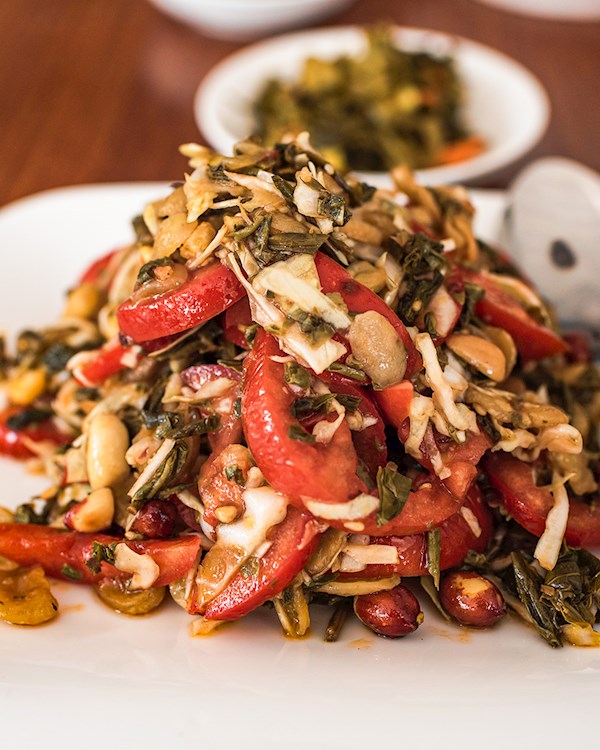
Laphet Thoke is a salad of fermented tea leaves (laphet) tossed with a medley of textures: roasted peanuts, fried garlic, sesame seeds, dried shrimp, fresh cabbage, tomatoes, green chilies, and lime. Unlike sweet iced tea, the tea leaves here are eaten, not brewed—making this dish unique in world cuisine.
Fermented Tea Leaves (Laphet)
The heart of the dish is laphet: young tea leaves that are steamed, packed, and naturally fermented for months. The result is a complex flavor—earthy, slightly bitter, and pleasantly tangy. Traditionally, laphet was offered as a peace offering between rival communities, a custom that still echoes in its role at social gatherings today.
Key Ingredients
Fermented tea leaves (laphet) – tangy, earthy base
Roasted peanuts & sesame seeds – nutty crunch
Fried garlic – savory depth
Dried shrimp – umami (optional)
Fresh cabbage & tomatoes – crisp freshness
Green chilies & lime – heat and brightness
Oil & fish sauce – balance and richness
Vegetarian versions simply omit dried shrimp and adjust seasoning.
How Laphet Thoke Is Served
Laphet Thoke is often shared communally, either pre-mixed or arranged in separate piles so diners can combine ingredients to taste. It’s enjoyed:
As a snack with tea
As a side dish at meals
At ceremonies and festivals
In teashops as a signature offering
Because fermented tea contains natural caffeine, it’s typically eaten earlier in the day.
Cultural Significance
Few dishes carry as much meaning as Laphet Thoke. It represents unity, respect, and tradition, appearing at weddings, religious events, and important meetings. Offering laphet to guests is a sign of welcome and goodwill—a practice deeply woven into Myanmar culture.
Variations
Traditional style: Balanced bitterness and crunch
Street-style: Extra chilies and oil for punch
Modern versions: Added avocado or less oil for a lighter profile
Regional tweaks: Adjusted spice levels and textures
Why Laphet Thoke Matters
Laphet Thoke isn’t just food—it’s a conversation starter, a shared ritual, and a living tradition. Its bold flavors mirror Myanmar’s culinary identity: layered, thoughtful, and deeply communal.
✅ Frequently Asked Questions (FAQ)
What is Laphet Thoke?
Laphet Thoke is a traditional Myanmar salad made from fermented tea leaves mixed with nuts, seeds, garlic, vegetables, and seasonings. It is one of Myanmar’s most culturally significant dishes.
What do fermented tea leaves taste like?
Fermented tea leaves have a unique flavor that is slightly bitter, tangy, earthy, and savory. This complex taste is what makes Laphet Thoke distinct from other salads.
Is Laphet Thoke vegetarian?
Laphet Thoke can be vegetarian. Traditional versions may include dried shrimp, but vegetarian versions simply omit it and rely on tea leaves, nuts, seeds, and vegetables.
When is Laphet Thoke eaten in Myanmar?
Laphet Thoke is eaten as a snack, side dish, or light meal and is commonly served at teashops, family gatherings, religious ceremonies, and celebrations.
Why is Laphet Thoke important in Myanmar culture?
Laphet Thoke symbolizes hospitality, unity, and respect. Historically, fermented tea leaves were offered as a peace gesture, and today the dish remains a symbol of welcome.
Does Laphet Thoke contain caffeine?
Yes. Because it is made from tea leaves, Laphet Thoke naturally contains caffeine and is often eaten earlier in the day.