Mohinga: Myanmar’s National Dish
Mohinga is widely regarded as the national dish of Myanmar, a fragrant fish-based noodle soup that holds deep cultural significance. Enjoyed across the country—most famously as a breakfast staple—mohinga reflects Myanmar’s culinary identity through its balance of savory, sour, and herbal flavors.
What Is Mohinga?
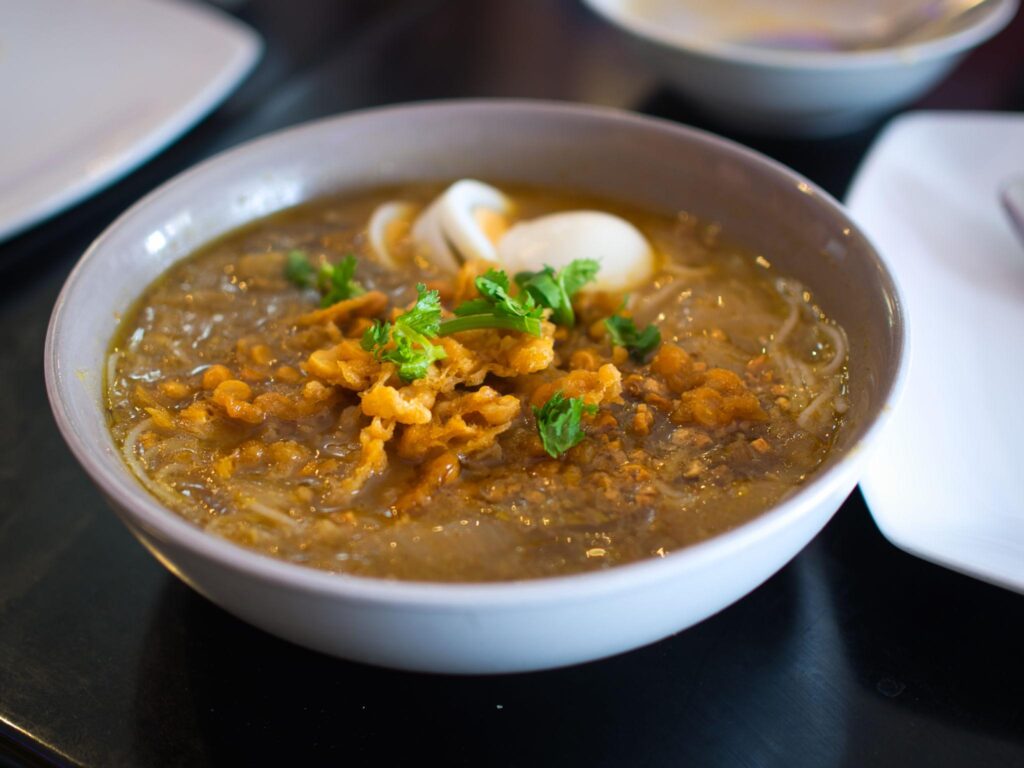
At its core, mohinga is a rice noodle soup made with a rich broth of freshwater fish, lemongrass, banana stem, ginger, garlic, and onions, thickened lightly with toasted rice flour or chickpea flour. The dish is typically finished with crispy fritters and fresh garnishes that add texture and brightness.
Key Ingredients
Fish: Traditionally catfish or snakehead, providing a clean, savory base
Rice noodles: Soft, round noodles that absorb the aromatic broth
Lemongrass & ginger: Citrus and warmth for depth
Banana stem: Subtle crunch and mild sweetness
Toasted rice flour: Natural thickener with nutty notes
Toppings: Crispy fritters (akyaw), boiled egg, coriander, sliced onions, lime
How Mohinga Is Served
Mohinga is most commonly eaten in the morning, sold by street vendors and served in teashops. That said, it’s enjoyed any time of day—from casual lunches to celebratory gatherings. Regional variations adjust spice levels, fish choices, and toppings, but the essence remains the same.
Cultural Significance
More than a meal, mohinga is a shared experience. Families have their own recipes passed down through generations, and communities gather around bowls of steaming soup. Its affordability and availability make it a dish that unites people across social and regional lines.
Regional Variations
Yangon-style: Balanced, aromatic, and widely popular
Mandalay-style: Often thicker and more robust
Coastal regions: Brighter acidity and seafood-forward notes
Northern regions: Heartier textures with local herbs
Each version showcases local ingredients and tastes, demonstrating the diversity within Myanmar cuisine.
Why Mohinga Matters
Mohinga represents comfort, tradition, and national pride. It’s one of the first dishes many visitors try—and one locals return to again and again. Simple yet complex, humble yet iconic, mohinga tells the story of Myanmar in a bowl.
Frequently Asked Questions (FAQ)
What is Mohinga?
Mohinga is Myanmar’s national dish, a traditional fish noodle soup made with rice noodles, fish broth, lemongrass, banana stem, and aromatic spices. It is most commonly eaten as breakfast.
Is Mohinga eaten only for breakfast?
While mohinga is traditionally enjoyed in the morning, it is eaten throughout the day in Myanmar, including for lunch and dinner, especially at teashops and street stalls.
What fish is used in Mohinga?
Mohinga is traditionally made with freshwater fish such as catfish or snakehead fish, which provide a rich and savory base for the broth.
Is Mohinga spicy?
Mohinga is generally mild rather than spicy. Chili oil or dried chili flakes are often served on the side so diners can adjust the heat to their taste.
Why is Mohinga important in Myanmar culture?
Mohinga is more than a meal—it is a cultural symbol of Myanmar, representing tradition, community, and everyday life. It is enjoyed by people of all backgrounds across the country.
What are common toppings for Mohinga?
Common toppings include crispy fritters (akyaw), boiled eggs, sliced onions, coriander, lime, and sometimes fish cakes or chickpea fritters.
Can Mohinga be made vegetarian?
Yes. Vegetarian versions of mohinga use vegetable broth and mushrooms or tofu instead of fish, while keeping the traditional spices and aromatics.