
Myanmar Junta Amnesties More Than 3,000 Political Prisoners Ahead of Controversial Election
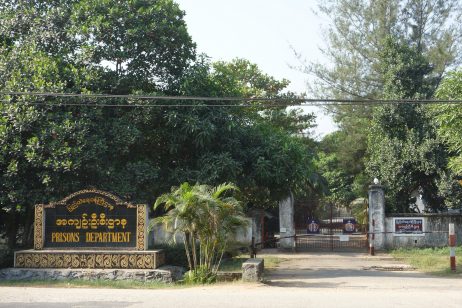
In the weeks leading up to Myanmar’s highly contested national election, the country’s military administration has announced a sweeping amnesty affecting thousands of political detainees. According to state media reports, more than 3,000 individuals convicted under the country’s controversial penal code provisions have been pardoned and ordered released. An additional 5,500 people facing similar charges but not yet convicted will see their cases dropped. The timing of this mass amnesty has prompted intense debate, as domestic and international observers question whether the policy is designed to broaden participation in the polls or simply to reinforce military legitimacy.
State-run broadcaster MRTV reported that the National Defense and Security Council (NDSC) authorized the release of 3,085 prisoners convicted under Section 505(a) of the penal code. The council also ordered the elimination of charges against 5,580 people who were still awaiting trial for offences under the same provision. In its official announcement, MRTV stated that the government’s decision was intended “to ensure that all eligible voters do not lose their right to vote and can cast their votes freely and fairly in the upcoming multi-party democratic general election.”
Section 505(a): Broad Authority to Criminalize Dissent
Section 505(a) of the Myanmar penal code has been one of the most widely used legal tools for suppressing dissent since the military coup of February 2021. The provision criminalizes the distribution of “false news,” as well as any action that might cause fear or unrest among a group of citizens or the broader public. While the law predates the current administration, its enforcement intensified dramatically following the military’s seizure of power. Thousands of activists, journalists, protesters, and ordinary citizens were charged under this law, often for social media posts, peaceful demonstrations, or public criticism of government actions.
Convictions under Section 505(a) can result in prison sentences of up to three years. For those arrested in the months following the coup, many were held without trial, denied access to legal representation, or subjected to military tribunals rather than civilian courts. Accordingly, the government’s announcement does not represent a minor policy change—it affects a significant segment of the political prisoner population.
Whether any prisoners have been physically released from detention facilities remains unclear. Rights groups say the state has not yet confirmed when or how the individuals will be freed. According to data from the Assistance Association for Political Prisoners (AAPP), an organization that tracks arrests and political detentions in Myanmar, more than 30,031 people have been arrested since the coup began, and over 22,700 remain incarcerated. For many families, the amnesty announcement offers a rare glimmer of hope, but the lack of transparency means expectations remain uncertain.
Preparing for an Election Few Expect to Be Free or Fair
Myanmar’s elections are scheduled to take place in phases beginning December 28, though the process itself has faced widespread international criticism. Analysts, diplomats, and human rights groups have described the upcoming vote as an attempt to create a veneer of constitutional legitimacy for military authority. Critics argue that the structure of the election is not designed to reflect popular will, but rather to consolidate the military’s political control through a quasi-civilian framework.
The armed forces have long played a dominant role in the country’s political system. Under Myanmar’s previous constitutional arrangements, 25 percent of parliamentary seats were automatically reserved for military representatives, giving the generals a built-in veto over any constitutional change. Following the 2021 coup, the junta dissolved the democratically elected parliament and detained many elected leaders, including Aung San Suu Kyi and former president Win Myint.
In 2023, the junta escalated its political restructuring by dissolving 40 political parties, including Suu Kyi’s National League for Democracy (NLD). The NLD had won two consecutive elections in 2015 and 2020 by overwhelming margins. The party’s elimination from the electoral landscape has drastically limited the competitive environment and has been widely interpreted as a deliberate move to prevent any organized political challenge to military-backed candidates.
In addition to restricting political participation, the junta has expanded its military campaigns against resistance strongholds. Government forces have intensified aerial bombardments and ground operations in ethnic-administered regions and areas under the control of armed resistance groups. These conditions have raised serious concerns about voter access, polling station security, and the feasibility of conducting elections in unstable regions.
A History of Symbolic Amnesties
The December amnesty is not the first time the current leadership has used mass releases to improve its public image. In January, roughly 5,800 prisoners were freed on Independence Day, including an estimated 600 people detained under Section 505 provisions. In other instances, smaller batches of political detainees have been released on culturally or religiously significant occasions, such as Buddhist holidays or national anniversaries.
While these amnesties have offered relief to some affected families, rights groups and political observers contend that the releases are transactional. They argue that the military uses amnesties strategically to create an image of benevolence or openness, especially at moments when international pressure intensifies. In most cases, only a fraction of political detainees are released, and many of those freed have later been rearrested under new charges.
The latest amnesty appears to follow this pattern. Though more than 3,000 already-convicted prisoners have nominally received pardons, 724 of them were explicitly released under conditional supervision. Official notices warned that if any of these individuals commit offenses in the future, they will be required to serve both their new sentences and whatever portion of their original sentence remained at the time of release. This clause effectively grants the state broad power to reincarcerate those who participate in political activity.
Advocacy organizations and civil society voices caution that many of the other pardoned individuals could face similar risks. The legal and political environment remains unpredictable, with broad discretionary authority vested in military courts, police, and administrative bodies. Critics warn that, even if a prisoner is “released,” the conditions placed upon them can discourage public expression or political engagement.
Amnesty as a Political Instrument
Observers say that the scale and timing of the amnesty align closely with the junta’s effort to increase voter turnout, neutralize international criticism, and shape a narrative of progress. Commentator Mark Farmaner, head of Burma Campaign UK, stated that the policy was “wonderful news” for those released, but he warned that the prisoners were being used “for public relations purposes… to build a fake narrative of reform.” Farmaner and other advocates argue that the government has shown little willingness to engage meaningfully with democratic movements, and that isolated gestures of mercy do not change the structural repression that defines the current system.
At the same time, Myanmar’s fragmented internal landscape will likely challenge the logistical viability of the elections. Active conflict persists across several states, internet shutdowns have become routine in resistance-held areas, and millions of displaced people do not have stable homes or polling access. Even if pardoned individuals do vote, their presence alone will not address these deeper challenges.
A Complex Moment of Uncertainty
For families of detainees, the amnesty brings relief and hope, especially for those who have endured years of uncertainty since the 2021 coup. Many prisoners have faced long pre-trial detentions, restricted access to lawyers, and inadequate medical care. Their release—whether conditional or unconditional—marks a meaningful human outcome that cannot be dismissed.
Yet the broader context tempers optimism. The structure of Myanmar’s election process, combined with the blurred legal boundaries surrounding civil participation, makes it difficult to interpret the amnesty as a genuine democratic gesture. Without fundamental political reforms or credible guarantees of safety and fairness, the upcoming election will remain a deeply contested event that shapes the country’s political future.
Frequently Asked Questions (FAQ)
1. What is Section 505(a) in Myanmar’s penal code?
Section 505(a) criminalizes the dissemination of “false news” or any action that might cause fear or unrest among citizens. Since 2021, it has been heavily used to prosecute activists, journalists, and political critics.
2. How many people were affected by this amnesty?
The junta has ordered the release of 3,085 convicted prisoners and dropped charges against 5,580 individuals who were awaiting trial under Section 505(a).
3. Will these political prisoners be fully free?
Not necessarily. At least 724 individuals have been released conditionally, meaning they may be rearrested if they are accused of violating any law, including vague or politically motivated charges.
4. Why is the timing of the amnesty controversial?
The amnesty comes just weeks before a widely criticized election. Analysts believe the move is aimed at increasing voter participation and improving the junta’s legitimacy domestically and internationally.
5. Are Myanmar’s elections expected to be fair?
Most international observers express skepticism. Major opposition parties have been dissolved, many of their leaders are imprisoned, and conflict zones may prevent citizens from voting freely.
Related posts:
 𝗛𝗼𝘄 𝗠𝘆𝗮𝗻𝗺𝗮𝗿’𝘀 𝗖𝘆𝗯𝗲𝗿-𝗦𝗹𝗮𝘃𝗲𝗿𝘆 𝗡𝗲𝘁𝘄𝗼𝗿𝗸𝘀 𝗘𝘅𝗽𝗹𝗼𝗶𝘁 𝗬𝗼𝘂𝗻𝗴 𝗔𝗳𝗿𝗶𝗰𝗮𝗻𝘀 𝗔 𝗡𝗲𝘄 𝗣𝗵𝗮𝘀𝗲 𝗼𝗳 𝗮𝗻 𝗘𝘅𝗽𝗮𝗻𝗱𝗶𝗻𝗴 𝗖𝗿𝗶𝘀𝗶𝘀
 Dr. Sasa Resigns from NUG, Restructuring Expected Inside Shadow Government
 Dozens Killed in Chaung-U as Myanmar Military Launches Paraglider Attack
 U.S. Ends Temporary Protected Status for Myanmar Nationals
 Starlink Fuels Myanmar Scam Networks, U.S. Demands Geoblock
 ASEAN Rejects Myanmar’s Military Elections, Illegitimate