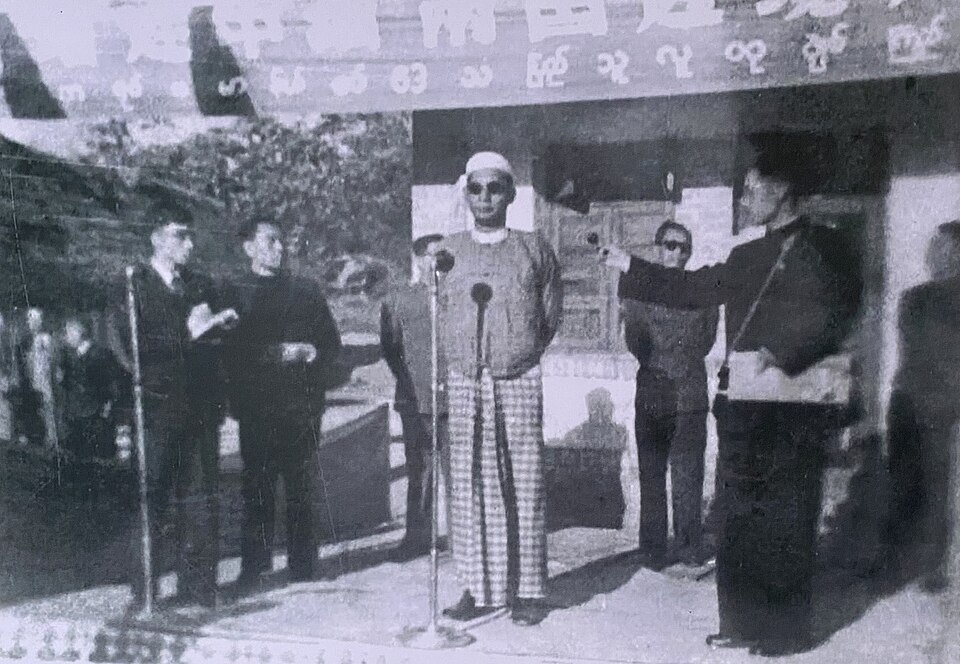
Ba Swe was one of the most influential political leaders in post-independence Myanmar, serving as Prime Minister during the turbulent years of the Anti-Fascist People’s Freedom League (AFPFL). A committed nationalist, socialist reformer, and independence-era politician, Ba Swe played a critical role in shaping Burma’s early democratic experiment after liberation from British colonial rule.
His leadership came at a time when Myanmar was struggling with internal divisions, ethnic conflicts, and ideological competition between democratic socialism and authoritarian governance. Although his tenure was relatively short, Ba Swe’s political impact remains significant in Myanmar’s modern history.
Early Life and Political Awakening
Ba Swe was born in 1915 during the British colonial period, a time when nationalist sentiment was growing rapidly across Burma. Like many leaders of his generation, he was drawn early into anti-colonial activism and student politics. These movements laid the foundation for the eventual independence struggle led by figures such as Aung San.
Ba Swe became closely aligned with socialist and labor movements, believing that political independence must be accompanied by social and economic justice. This belief would later define his policy positions and leadership style.
Role in the AFPFL
The Anti-Fascist People’s Freedom League (AFPFL) was the dominant political coalition in Burma following independence in 1948. Ba Swe emerged as one of its leading figures, alongside U Nu and Kyaw Nyein.
Within the AFPFL, Ba Swe represented the more pragmatic and firm-wing leadership. He supported:
Strong central authority to maintain national unity
Socialist-oriented economic reforms
Labor protections and state involvement in key industries
As internal factionalism intensified within the AFPFL, Ba Swe became a central actor in the power struggle that reshaped Myanmar’s post-independence government.
Tenure as Prime Minister
Ba Swe served as Prime Minister from 1956 to 1957, succeeding U Nu during a period of political instability. His government faced serious challenges, including:
Internal AFPFL splits
Armed ethnic and communist insurgencies
Economic difficulties and administrative inefficiency
Despite these obstacles, Ba Swe sought to restore discipline within the ruling party and strengthen government authority. His leadership style was widely viewed as decisive, though sometimes controversial.
While his term was brief, it marked an important transitional phase between parliamentary democracy and the later emergence of military dominance in Myanmar politics.
Political Ideology and Leadership Style
Ba Swe was a committed democratic socialist. He believed in:
Parliamentary governance
Social equality and labor rights
National unity over ethnic or regional fragmentation
Unlike more conciliatory leaders, Ba Swe favored firmness in dealing with political dissent and insurgency. Supporters praised his decisiveness, while critics argued that his approach deepened political divisions within the AFPFL.
His leadership reflected the broader struggle of newly independent states trying to balance democracy, security, and development.
Later Political Career
Following his time as Prime Minister, Ba Swe remained politically active but gradually lost influence as Myanmar’s political system destabilized. The AFPFL split permanently, and the military increasingly intervened in civilian politics.
After the 1962 military coup led by General Ne Win, Ba Swe—like many civilian politicians of the independence era—was sidelined. The coup effectively ended the parliamentary system that leaders like Ba Swe had fought to establish.
Legacy and Historical Significance
Ba Swe is remembered as:
A key architect of early post-independence governance
One of the strongest leaders of the AFPFL era
A symbol of Myanmar’s lost parliamentary democracy
Although overshadowed by figures such as Aung San and U Nu, Ba Swe’s role remains essential to understanding why Myanmar’s early democratic experiment struggled and eventually collapsed.
His career highlights the fragility of democracy in post-colonial states facing internal conflict and ideological division.
Conclusion
Ba Swe’s tenure as Prime Minister represents a critical chapter in Myanmar’s modern history. As a leader during the AFPFL era, he attempted to preserve national unity, strengthen democratic institutions, and implement socialist reforms under extremely difficult conditions.
While his time in office was short, Ba Swe’s political legacy endures as part of Myanmar’s foundational struggle between democracy and authoritarianism—one that continues to shape the country today.
FAQ (5–7 Questions)
Who was Ba Swe?
Ba Swe was a Burmese nationalist leader and former Prime Minister of Myanmar during the AFPFL era in the 1950s.
When did Ba Swe serve as Prime Minister?
He served as Prime Minister from 1956 to 1957.
What was the AFPFL?
The Anti-Fascist People’s Freedom League was the main political coalition governing Myanmar after independence in 1948.
What political ideology did Ba Swe support?
Ba Swe supported democratic socialism, combining parliamentary democracy with social and economic reforms.
Why is Ba Swe historically important?
He was a key leader during Myanmar’s early democratic period and played a major role in shaping post-independence governance.
What happened to Ba Swe after the military coup?
After the 1962 military coup, Ba Swe was sidelined from politics along with other civilian leaders.