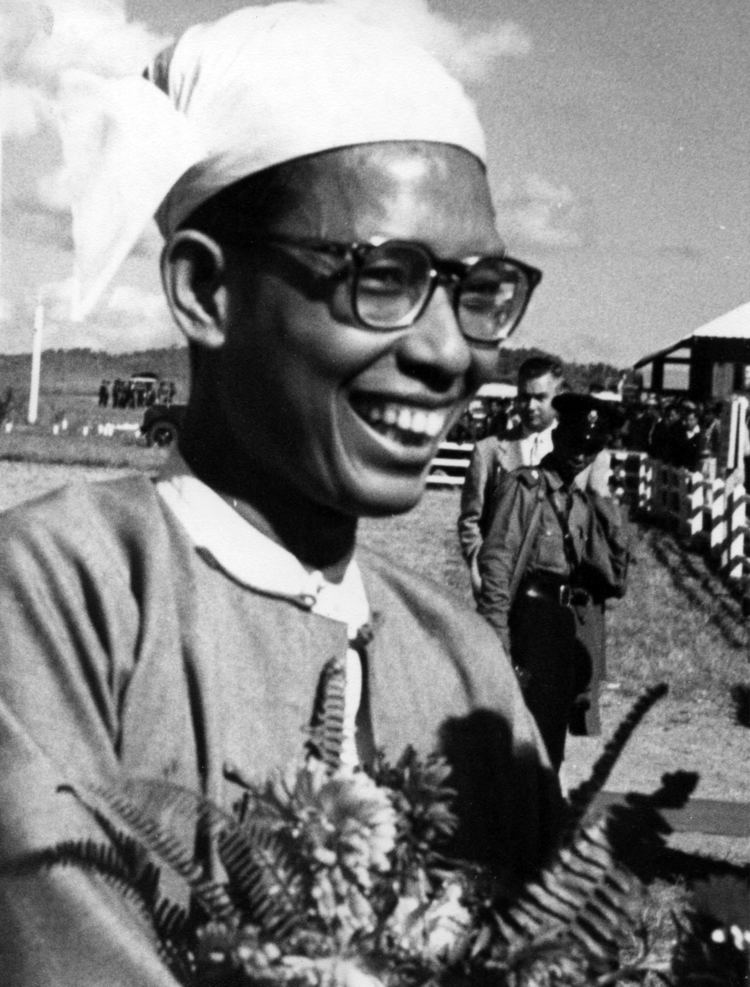
Kyaw Nyein was one of the most intellectually influential political figures in Myanmar’s early post-independence period. Best known as a Deputy Prime Minister and a principal architect of Burma’s constitutional and parliamentary framework, Kyaw Nyein played a decisive role in shaping the country’s democratic institutions after independence in 1948.
While less publicly celebrated than figures like Aung San or U Nu, Kyaw Nyein’s contributions were foundational. He was a strategist, legal thinker, and party organizer whose influence extended deep into the structure of Myanmar’s early civilian government.
Early Life and Political Formation
Kyaw Nyein was born in 1913 during the British colonial era, a period marked by rising nationalist consciousness across Burma. He belonged to a generation of educated Burmese leaders who believed that independence required not only freedom from colonial rule but also strong institutions grounded in law and constitutional order.
During his early political life, Kyaw Nyein became involved in nationalist movements that opposed both colonial administration and later Japanese occupation. These experiences shaped his belief that long-term stability depended on constitutional governance rather than revolutionary authority alone.
Role in the Anti-Fascist People’s Freedom League (AFPFL)
Following independence, the Anti-Fascist People’s Freedom League (AFPFL) emerged as Myanmar’s dominant political force. Kyaw Nyein quickly rose within its leadership ranks, becoming one of the coalition’s most trusted intellectuals and policy designers.
Within the AFPFL, Kyaw Nyein was known for:
Strong commitment to parliamentary democracy
Emphasis on constitutional legality and rule of law
Strategic political planning rather than populist leadership
He often worked behind the scenes, balancing ideological differences between party leaders while helping to design governance systems capable of holding the fragile new state together.
Deputy Prime Minister of Myanmar
Kyaw Nyein served as Deputy Prime Minister during the 1950s, a period of intense political complexity. The government faced armed insurgencies, economic hardship, and deep divisions within the AFPFL itself.
As Deputy Prime Minister, Kyaw Nyein focused on:
Institutional stability
Legislative and constitutional continuity
Strengthening civilian control over government administration
Unlike leaders known for charisma or mass appeal, Kyaw Nyein’s strength lay in governance mechanics—ensuring that parliamentary processes, ministries, and legal frameworks functioned coherently.
Architect of Myanmar’s Constitutional Framework
Kyaw Nyein’s most enduring legacy lies in his contribution to Myanmar’s constitutional development. He played a central role in drafting and refining the country’s early constitutional arrangements, which were among the most democratic in Southeast Asia at the time.
His constitutional vision emphasized:
Separation of powers
Civilian supremacy over the military
Protection of parliamentary authority
Legal safeguards against authoritarian concentration of power
Although these ideals were later dismantled following military intervention, Kyaw Nyein’s work represents one of Myanmar’s strongest historical commitments to democratic governance.
Political Ideology and Governance Philosophy
Kyaw Nyein was a pragmatic democratic socialist. He believed that political freedom must be supported by:
Strong legal institutions
Social justice and equality
Responsible state involvement in economic planning
Unlike more ideological or confrontational leaders, he favored negotiation, compromise, and institutional solutions. This approach made him indispensable in times of crisis—but also meant his influence was often understated in popular historical narratives.
Later Years and Decline of Civilian Rule
As political instability increased in the late 1950s, civilian authority weakened. Internal AFPFL conflicts intensified, and military leaders gained influence under the pretext of restoring order.
Following the 1962 military coup led by General Ne Win, Kyaw Nyein—along with many civilian leaders of the independence era—was removed from political life. The constitutional system he helped design was effectively dismantled.
Legacy and Historical Importance
Kyaw Nyein is remembered as:
A principal constitutional architect of independent Myanmar
A stabilizing force within the AFPFL leadership
One of the strongest defenders of parliamentary democracy
Though less visible than prime ministers and revolutionary leaders, Kyaw Nyein’s contributions were structural rather than symbolic. Without figures like him, Myanmar’s early democratic experiment would not have functioned as long as it did.
His career stands as a reminder that nation-building depends not only on charismatic leadership but also on careful institutional design.
Conclusion
Kyaw Nyein’s role in Myanmar’s history goes beyond titles. As Deputy Prime Minister and constitutional architect, he helped lay the legal and institutional foundations of an independent state striving for democracy under immense pressure.
Although military rule later erased much of his constitutional legacy, Kyaw Nyein remains a key figure for understanding what Myanmar’s early democracy aspired to achieve—and what was ultimately lost.
Frequently Asked Questions (FAQ)
Who was Kyaw Nyein?
Kyaw Nyein was a Burmese politician who served as Deputy Prime Minister and played a major role in shaping Myanmar’s early constitutional framework.
What position did Kyaw Nyein hold in government?
Kyaw Nyein served as Deputy Prime Minister of Myanmar during the AFPFL era in the 1950s.
Why is Kyaw Nyein called a constitutional architect?
He helped design and refine Myanmar’s post-independence constitutional and parliamentary systems, emphasizing civilian rule and legal governance.
What political party was Kyaw Nyein associated with?
Kyaw Nyein was a senior leader in the Anti-Fascist People’s Freedom League (AFPFL), Myanmar’s ruling coalition after independence.
What ideology did Kyaw Nyein support?
He supported democratic socialism, combining parliamentary democracy with social justice and institutional governance.
What happened to Kyaw Nyein after the 1962 coup?
After the 1962 military coup, Kyaw Nyein was removed from political influence as civilian rule ended in Myanmar.