Maung Aye: Deputy Military Ruler of Myanmar
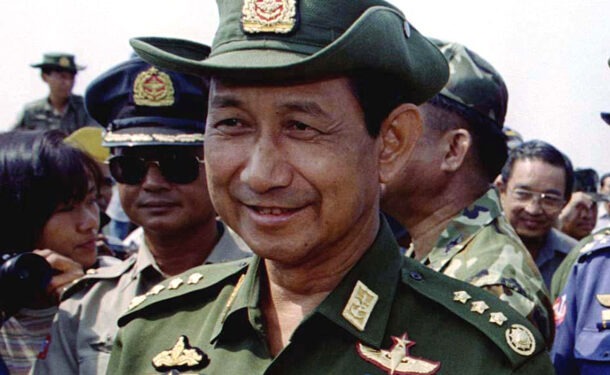
Maung Aye was one of the most influential figures in Myanmar’s modern military history, serving for many years as the deputy military ruler during a period of strict authoritarian control. As Vice Senior General of the Tatmadaw and Deputy Chairman of the State Peace and Development Council (SPDC), he was widely regarded as the second-most powerful man in the country, operating directly beneath Senior General Than Shwe.
Although he maintained a lower public profile than the head of state, Maung Aye exercised enormous influence over military strategy, internal security, and political decision-making, shaping Myanmar’s governance during the late 20th and early 21st centuries.
Early Life and Military Background
Maung Aye was born on 25 December 1938 in Kyaunggon, Irrawaddy Delta, British Burma. He joined the Burmese armed forces at a young age and received formal military training during a time when the Tatmadaw was consolidating its role as the dominant political institution in the country.
Unlike political leaders who emerged from nationalist movements or civilian backgrounds, Maung Aye’s career developed entirely within the military hierarchy. He rose steadily through the ranks, earning a reputation as a hardline officer with a firm belief in discipline, centralized command, and the military’s role as the ultimate guardian of national unity.
Rise Through the Tatmadaw
Maung Aye’s rise coincided with a period of internal insurgencies, political instability, and ethnic conflict. His operational experience in military regions and command positions strengthened his standing among senior officers.
By the late 1980s, he had become part of the top echelon of the Tatmadaw. Following the 1988 nationwide uprising, the military seized full control of the state, establishing the State Law and Order Restoration Council (SLORC). Maung Aye emerged as one of the council’s most powerful members.
In the mid-1990s, SLORC was restructured and renamed the State Peace and Development Council (SPDC), with Maung Aye appointed Deputy Chairman—a role that cemented his position as deputy military ruler.
Role as Deputy Military Ruler
Second-in-Command to Than Shwe
As deputy to Senior General Than Shwe, Maung Aye functioned as:
Vice Senior General of the Tatmadaw
Deputy Chairman of SPDC
Key authority over army operations and security affairs
While Than Shwe was known for secrecy and strategic distance, Maung Aye was often perceived as a direct, forceful, and uncompromising enforcer of military policies.
Influence Over Military Operations
Maung Aye played a central role in:
Oversight of regional military commands
Counter-insurgency campaigns
Enforcement of martial authority in ethnic regions
Maintaining loyalty within the officer corps
His influence extended deeply into the military’s internal command structure, making him one of the most powerful figures shaping day-to-day governance.
Political and Economic Influence
Governance Without Civilian Oversight
Like other senior generals of the era, Maung Aye operated within a system where:
Political parties were suppressed
Media was censored
Civilian institutions were subordinate to military rule
He supported the junta’s emphasis on order, stability, and military unity, often prioritizing security concerns over political reform.
Role in State-Controlled Economy
Economic governance during his tenure favored military-linked enterprises and cronies, contributing to inequality and limited economic mobility. While Maung Aye was not publicly associated with economic policy design, his role in sustaining the military system directly supported the prevailing economic structure.
Relationship With Political Opposition
Maung Aye was widely viewed as a hardliner in dealing with political opposition, including pro-democracy movements and ethnic political organizations.
During the long periods of Aung San Suu Kyi’s detention, Maung Aye was considered one of the generals most resistant to negotiations or concessions. His stance reinforced the junta’s refusal to recognize the results of the 1990 general election, which the opposition overwhelmingly won.
Transition and Retirement
End of SPDC Era
By the late 2000s, Myanmar’s military leadership initiated a controlled political transition, culminating in the 2008 Constitution and 2010 general elections.
In 2011, with the formal dissolution of the SPDC and the establishment of a quasi-civilian government, Maung Aye:
Retired from official positions
Withdrew from public life
Retained no formal political role
Unlike some military figures, he did not attempt to enter civilian politics or assume advisory positions.
Death and Legacy
Maung Aye died on 2 July 2023 at the age of 84. His death marked the passing of one of the last senior figures of Myanmar’s long-standing military junta era.
Historical Assessment
Maung Aye is generally remembered as:
A powerful enforcer of military rule
A central architect of junta stability
A hardline defender of Tatmadaw dominance
Critics associate him with decades of repression and lack of democratic progress, while supporters within military circles emphasize his role in maintaining institutional unity during turbulent times.
Why Maung Aye Matters in Myanmar History
Maung Aye’s career illustrates how power functioned inside Myanmar’s military hierarchy—where deputy leaders often wielded immense authority despite limited public visibility.
Understanding his role helps explain:
How military governance was sustained
Why reform was tightly controlled
The enduring influence of Tatmadaw leadership structures
❓ Frequently Asked Questions (FAQ)
1. Who was Maung Aye?
Maung Aye was a senior Burmese general and deputy military ruler who served as Vice Senior General and Deputy Chairman of the SPDC.
2. What position did Maung Aye hold?
He was Deputy Chairman of the State Peace and Development Council and second-in-command to Than Shwe.
3. Was Maung Aye more powerful than civilian leaders?
Yes. During junta rule, military leaders like Maung Aye held ultimate authority over all civilian institutions.
4. What was Maung Aye’s leadership style?
He was widely regarded as a hardline, discipline-focused military leader.
5. When did Maung Aye retire?
He retired from official roles in 2011 following Myanmar’s controlled political transition.
6. When did Maung Aye die?
He died on 2 July 2023.