Min Aung Hlaing: Myanmar Military Leader and Coup Architect
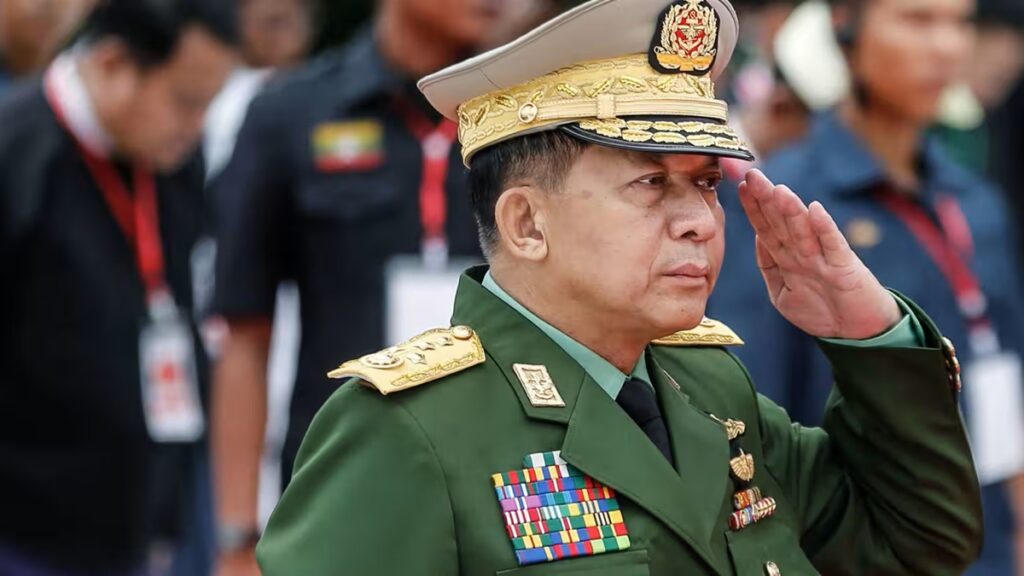
Min Aung Hlaing is one of the most consequential and polarizing figures in Myanmar’s contemporary history. As Commander-in-Chief of the Tatmadaw (Myanmar Armed Forces) and head of the State Administration Council (SAC), he has been the country’s de facto ruler since February 2021, following the military’s seizure of power from the elected civilian government.
His leadership has fundamentally altered Myanmar’s political trajectory, reversing a decade of partial democratic governance and re-entrenching military dominance over the state. Understanding Min Aung Hlaing is essential to understanding Myanmar’s ongoing political crisis, civil conflict, and international isolation.
Early Life and Education
Min Aung Hlaing was born on 3 July 1956 in Dawei (Tavoy), Tanintharyi Region, in southern Myanmar. His early life remains relatively private, reflecting the Tatmadaw’s tradition of discretion surrounding senior officers’ personal backgrounds.
He attended the Defence Services Academy (DSA), Myanmar’s most prestigious military training institution, which has produced generations of senior military and political leaders. Graduation from the DSA is widely regarded as a key pathway to elite positions within the Tatmadaw.
Military Career and Rise Through the Ranks
Min Aung Hlaing’s career advanced steadily within the military hierarchy. He served in a variety of command and staff roles, particularly in regions affected by ethnic conflict. These postings reinforced his alignment with the Tatmadaw’s long-standing doctrine that emphasizes national unity, centralized authority, and military guardianship of the state.
In 2011, he was appointed Commander-in-Chief of Defence Services, succeeding Senior General Than Shwe’s chosen leadership structure as Myanmar transitioned to a quasi-civilian government under President Thein Sein.
As commander-in-chief, Min Aung Hlaing:
Exercised authority over all branches of the armed forces
Held significant constitutional power under the 2008 Constitution
Became one of the most influential actors in Myanmar’s hybrid political system
Role During Myanmar’s Reform Period (2011–2020)
Although Myanmar experienced political and economic reforms after 2011, the Tatmadaw retained substantial autonomy and power. Min Aung Hlaing frequently emphasized the military’s constitutional role as the protector of national unity and sovereignty.
During this period:
The military maintained control over key ministries
Civil-military tensions persisted beneath the surface
The Tatmadaw resisted constitutional amendments that would reduce its influence
His public statements increasingly suggested unease with the growing popularity and authority of the National League for Democracy (NLD) and civilian leaders.
The 2021 Military Coup
Seizure of Power
On 1 February 2021, hours before a newly elected parliament was set to convene, the military detained senior civilian leaders, including State Counsellor Aung San Suu Kyi and President Win Myint.
Min Aung Hlaing declared a state of emergency, transferred power to the military, and established the State Administration Council (SAC), with himself as chairman.
The coup followed the 2020 general election, in which the NLD won a decisive victory. The military alleged widespread electoral fraud—claims widely rejected by domestic and international observers.
Governance Under the State Administration Council
Centralized Military Rule
Since 2021, Min Aung Hlaing has governed through the SAC, reasserting direct military control over:
Executive authority
Judicial processes
Security and internal administration
Civil liberties were sharply curtailed, and emergency laws were expanded to suppress opposition.
Resistance and Armed Conflict
The coup sparked nationwide protests and a broad civil resistance movement, followed by the emergence of armed opposition groups.
Myanmar entered a period of:
Intensified civil conflict
Widespread displacement
Severe humanitarian challenges
The Tatmadaw responded with large-scale security operations, deepening polarization and instability.
International Response and Isolation
Min Aung Hlaing’s leadership has resulted in renewed international isolation for Myanmar.
Key developments include:
Sanctions imposed by Western governments
Diplomatic distancing by regional and global partners
Limited recognition of the SAC’s legitimacy
ASEAN engagement has been strained, with Myanmar facing restrictions in regional diplomatic forums due to lack of progress on political dialogue.
Political Ambitions and Future Plans
Min Aung Hlaing has indicated intentions to:
Oversee a new electoral process under military supervision
Maintain the Tatmadaw’s dominant role in governance
Transition from military leadership to a formal political role
Critics argue that such plans aim to legitimize continued military control rather than restore democratic governance.
Public Perception Inside Myanmar
Min Aung Hlaing’s standing within Myanmar is deeply divisive:
Supporters within the military frame him as a defender of sovereignty and stability
Critics view him as responsible for democratic reversal, economic collapse, and widespread suffering
Among the general population, opposition to his rule remains strong, particularly among younger generations.
Legacy and Historical Assessment
Min Aung Hlaing’s legacy is still unfolding, but historians and analysts increasingly view him as:
The central figure behind Myanmar’s post-2021 crisis
A leader who reversed democratic momentum
A symbol of entrenched military dominance
His decisions have reshaped Myanmar’s domestic politics, economy, and international standing in ways that will likely take decades to resolve.
Why Min Aung Hlaing Matters Today
Understanding Min Aung Hlaing is essential to understanding:
Myanmar’s ongoing civil conflict
The role of the Tatmadaw in politics
The challenges facing democratic restoration
He represents the continuation—and intensification—of a military tradition that has dominated Myanmar’s governance for much of its post-independence history.
❓ Frequently Asked Questions (FAQ)
1. Who is Min Aung Hlaing?
Min Aung Hlaing is Myanmar’s military leader and head of the State Administration Council following the 2021 coup.
2. What role did he play in the 2021 coup?
He led the military takeover that removed the elected civilian government from power.
3. What position does Min Aung Hlaing hold?
He is Commander-in-Chief of the Tatmadaw and Chairman of the State Administration Council.
4. Why is Min Aung Hlaing controversial?
He is widely criticized for overturning democratic elections and leading a crackdown on opposition.
5. Is Min Aung Hlaing internationally recognized as leader?
Recognition is limited; many countries and organizations do not recognize the SAC as legitimate.
6. What impact has his leadership had on Myanmar?
It has led to renewed conflict, economic decline, humanitarian crises, and international isolation.