📘 Min Ko Naing – Pro-Democracy Activist and 88 Generation Leader
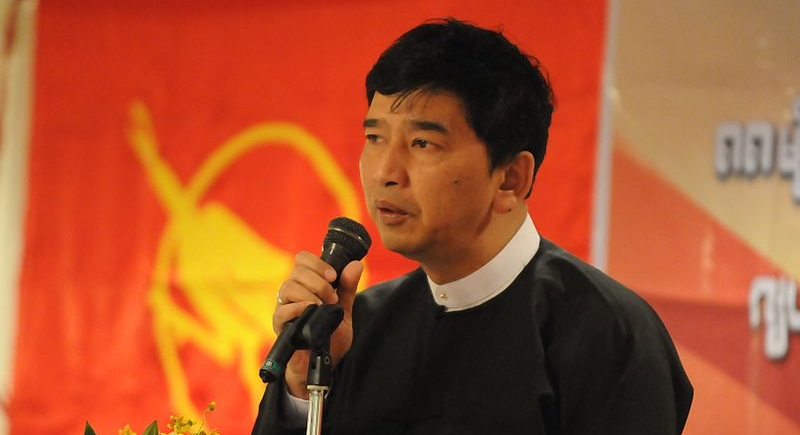
Min Ko Naing is one of Myanmar’s most prominent pro-democracy activists and a central figure of the 88 Generation, the student-led movement that challenged military rule during the nationwide uprisings of 1988. Known for his commitment to nonviolent resistance, political reform, and civil liberties, Min Ko Naing has played a defining role in Myanmar’s modern opposition history across multiple decades.
His influence stems not from holding formal political office but from sustained activism, moral leadership, and symbolic significance within Myanmar’s democracy movement.
Early Life and Student Activism
Min Ko Naing was born in Yangon and became politically active while studying at university during the late 1980s. As Myanmar’s economic and political crises deepened, university campuses emerged as centers of political debate and resistance. Min Ko Naing rose to prominence as a student leader advocating for democratic reforms, freedom of expression, and an end to one-party military rule.
His leadership style emphasized peaceful protest and collective action, distinguishing the student movement from armed resistance groups operating in border regions.
Role in the 1988 Uprising
The 8888 Uprising marked a watershed moment in Myanmar’s political history. Mass demonstrations erupted nationwide, calling for democratic governance and an end to military dictatorship. Min Ko Naing became one of the most recognizable faces of the movement, delivering speeches, organizing student networks, and articulating demands for political change.
Although the uprising was violently suppressed by the military, it fundamentally reshaped Myanmar’s political consciousness and produced a generation of opposition leaders whose influence persists today.
Arrests, Imprisonment, and Repression
Following the crackdown, Min Ko Naing was forced underground before being arrested in the early 1990s. He spent many years in prison under harsh conditions, including prolonged solitary confinement. His imprisonment became emblematic of the regime’s repression of peaceful dissent.
Despite repeated arrests and extended incarceration, Min Ko Naing remained committed to nonviolent activism. International human rights organizations frequently cited his case when documenting political imprisonment in Myanmar.
The 88 Generation and Continued Activism
After his release, Min Ko Naing continued his political engagement as a leading member of the 88 Generation Peace and Open Society, a network of former student activists focused on civic education, social justice, and political reform.
The group played an important role during the Saffron Revolution of 2007, supporting monk-led protests and calling for restraint, dialogue, and reform. Min Ko Naing’s emphasis on peaceful mobilization helped shape the tone and direction of the movement.
Relationship with Political Parties and Civil Society
Although closely associated with Myanmar’s broader pro-democracy movement, Min Ko Naing has generally remained independent of formal political parties. He has cooperated with elected leaders and political organizations when appropriate, while maintaining a civil-society-based approach focused on public engagement rather than electoral politics.
This position has allowed him to act as a bridge between activists, politicians, and the general public, particularly during periods of political transition.
Post-2011 Reform Era and Later Developments
During Myanmar’s partial political opening after 2011, Min Ko Naing participated in public discussions on constitutional reform, reconciliation, and the role of civil society in a transitioning state. While reforms raised hopes for democratic consolidation, ongoing structural challenges limited the scope of change.
Following the military’s return to direct rule, figures associated with the 88 Generation once again faced heightened risks, reinforcing the cyclical nature of repression and resistance in Myanmar’s political landscape.
Historical Significance
Min Ko Naing’s significance lies in his consistency across eras. From the 1988 uprising through later protest movements, he represents continuity in Myanmar’s struggle for democratic governance.
Within Who’s Who in Myanmar, he is classified as:
🏴 Opposition & Resistance → Activists & Protest Figures
This classification reflects:
His nonviolent activism
His leadership within civil resistance movements
His lack of formal governmental authority
Inclusion does not imply endorsement of political views; it reflects historical influence and public impact.
Legacy and Public Perception
Among supporters, Min Ko Naing is viewed as a principled advocate for democracy and human rights. Critics have questioned the effectiveness of nonviolent strategies under authoritarian conditions. Regardless of perspective, his role in shaping Myanmar’s opposition culture is widely acknowledged.
His life illustrates the risks faced by peaceful activists operating under repressive systems and highlights the long-term personal costs of political dissent.
Frequently Asked Questions (FAQ)
1. Who is Min Ko Naing?
Min Ko Naing is a Myanmar pro-democracy activist and a leading figure of the 88 Generation student movement.
2. Is Min Ko Naing a politician?
No. He is not an elected official and has generally remained outside formal party politics.
3. What is the 88 Generation?
The 88 Generation refers to activists who emerged from the 1988 nationwide uprising against military rule.
4. Was Min Ko Naing imprisoned?
Yes. He spent many years in prison for his political activities, including long periods of solitary confinement.
5. Did he advocate armed resistance?
No. Min Ko Naing is known for promoting nonviolent resistance and peaceful protest.
6. Is he affiliated with the National League for Democracy (NLD)?
He has cooperated with democratic leaders but is not formally affiliated with the NLD.
7. Why is he included in Who’s Who in Myanmar?
He is included due to his long-term influence on Myanmar’s pro-democracy movement and civil resistance history.