Thakin Than Tun: Anti-Colonial Revolutionary and Communist Leader
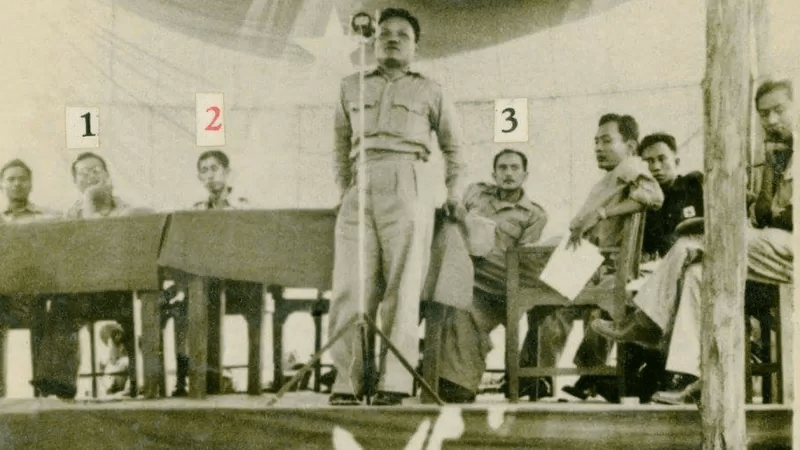
Thakin Than Tun was one of the most influential yet controversial figures in Myanmar’s modern political history. A dedicated anti-colonial revolutionary, Marxist theorist, and senior leader of the Communist Party of Burma (CPB), he played a decisive role in shaping Burma’s independence movement and its post-independence ideological struggles.
Unlike nationalist leaders who sought compromise with colonial authorities, Thakin Than Tun believed that true independence required radical social transformation, the dismantling of imperial economic structures, and the empowerment of workers and peasants. His uncompromising revolutionary stance placed him at the heart of Burma’s leftist politics—and eventually in armed conflict with the post-independence state.
Early Life and Education
Thakin Than Tun was born in 1911 in British Burma (present-day Myanmar). He came of age during a period of growing resistance to British colonial rule, when Burmese students and intellectuals increasingly challenged foreign domination.
He studied at Rangoon University, where he became deeply involved in student activism. The university environment exposed him to socialist and Marxist ideas circulating among Asian anti-colonial movements. These influences would shape his lifelong commitment to revolutionary politics.
The Thakin Movement and Anti-Colonial Struggle
Dobama Asiayone (We Burmans Association)
Thakin Than Tun emerged as a prominent member of the Dobama Asiayone, commonly known as the Thakin movement. Members adopted the title Thakin—meaning “master”—to assert Burmese ownership of their country and reject colonial hierarchy.
The movement sought:
Immediate independence from Britain
Mass political mobilization
National dignity and self-rule
Thakin Than Tun quickly distinguished himself as a radical thinker within the movement, advocating systemic change rather than gradual reform.
Founding the Communist Party of Burma
In 1939, Thakin Than Tun co-founded the Communist Party of Burma (CPB) alongside other revolutionary leaders, including Thakin Soe and Aung San. Although Aung San later pursued a broader nationalist path, Thakin Than Tun remained firmly committed to Marxist-Leninist ideology.
The CPB emphasized:
Class struggle
Anti-imperialism
Worker and peasant leadership
Revolutionary overthrow of colonial rule
Thakin Than Tun became one of the party’s leading ideologues and organizers.
World War II and Revolutionary Strategy
During World War II, Burma became a major battleground between imperial powers. Thakin Than Tun opposed both British colonialism and Japanese fascism, advocating an independent revolutionary path.
He helped establish underground resistance networks and promoted the idea that the war created opportunities for revolutionary change. While some nationalists cooperated tactically with foreign powers, Thakin Than Tun remained wary of replacing one form of domination with another.
Role in the Anti-Fascist Movement
Thakin Than Tun played an important role in the Anti-Fascist People’s Freedom League (AFPFL), a broad coalition formed to resist Japanese occupation and advance independence.
However, ideological tensions soon emerged. Thakin Than Tun pushed for a more radical, class-based revolution, while other leaders—including Aung San—prioritized national unity and political pragmatism.
These disagreements foreshadowed the deep divisions that would later fracture Burma’s post-independence politics.
Break With the Post-Independence State
Opposition to the AFPFL Government
After Burma achieved independence in 1948, Thakin Than Tun and the CPB broke with the ruling AFPFL government. He argued that independence had been achieved without dismantling colonial economic structures and that power remained concentrated among elites.
From his perspective:
Independence was incomplete
The working class remained marginalized
The military and bureaucracy preserved colonial patterns
These views placed him in direct opposition to the new state.
Armed Insurgency and Communist Resistance
Going Underground
In the late 1940s, Thakin Than Tun led the CPB into armed struggle against the Burmese government. The party established insurgent bases in rural areas, seeking to mobilize peasants and challenge state authority.
As leader of the CPB, he emphasized:
Guerrilla warfare
Political education
Ideological discipline
His leadership style was strict and doctrinaire, reflecting his belief that revolutionary success required unwavering commitment.
Ideological Leadership and Maoist Influence
During the 1950s and 1960s, Thakin Than Tun increasingly aligned the CPB with Maoist principles, emphasizing rural revolution, self-criticism, and ideological purity.
He rejected parliamentary politics entirely, viewing armed revolution as the only path to socialism in Burma. This stance isolated the CPB from broader political participation but strengthened its ideological coherence.
Death and Internal Party Conflict
Thakin Than Tun died in 1968 under violent circumstances within CPB-controlled territory. His death resulted from internal party conflict, reflecting the intense ideological struggles and factionalism that characterized revolutionary movements of the era.
His killing shocked supporters and weakened the CPB’s leadership structure, contributing to its long-term decline.
Legacy and Historical Assessment
Thakin Than Tun remains a polarizing figure in Myanmar history.
Supporters View Him As:
A principled anti-colonial revolutionary
A defender of workers and peasants
A consistent opponent of imperialism
Critics Argue That:
His rigid ideology fueled prolonged conflict
Armed struggle contributed to national instability
Political compromise was undervalued
Despite these debates, historians agree that his influence on Burma’s leftist politics was profound.
Relationship to General Aung San
Although Thakin Than Tun and General Aung San once worked closely, their political paths diverged sharply. Aung San pursued broad nationalist unity and state-building, while Thakin Than Tun prioritized class revolution and ideological transformation.
This split symbolized a larger divide within Burma’s independence movement—between pragmatic nationalism and revolutionary socialism.
Why Thakin Than Tun Matters Today
Understanding Thakin Than Tun is essential to understanding:
The roots of armed insurgency in Myanmar
Ideological divisions within the independence movement
The long shadow of communist politics in Myanmar
His life illustrates how unresolved social and economic questions shaped decades of conflict after independence.
❓ Frequently Asked Questions (FAQ)
1. Who was Thakin Than Tun?
He was a Burmese anti-colonial revolutionary and leading communist ideologue.
2. What role did he play in Burma’s independence movement?
He helped mobilize resistance against British rule and co-founded the Communist Party of Burma.
3. Why did he oppose the post-independence government?
He believed independence failed to deliver social justice and dismantle colonial economic systems.
4. What was the Communist Party of Burma?
A Marxist party that led armed resistance against the Burmese state after independence.
5. How did Thakin Than Tun die?
He was killed in 1968 during internal conflict within the Communist Party of Burma.
6. How is he remembered today?
As a radical revolutionary whose ideas shaped Burma’s leftist and insurgent politics.