U Tay Za: Myanmar Business Tycoon and Aviation Entrepreneur
U Tay Za is one of Myanmar’s most prominent and controversial business figures. A powerful business tycoon and entrepreneur, he is best known as the founder of the Htoo Group of Companies, a conglomerate with interests spanning aviation, construction, tourism, timber, infrastructure, and manufacturing. Over several decades, U Tay Za became emblematic of the close relationship between business elites and military-led governments in Myanmar.
His rise, business expansion, and international scrutiny reflect broader dynamics within Myanmar’s political economy—particularly during periods of military rule and international sanctions.
Early Life and Background
U Tay Za was born in 1964 in northern Myanmar. Details about his early life are limited, reflecting a broader pattern among Myanmar’s business elites, whose personal backgrounds often remain private.
He entered business at a young age, initially engaging in trading and logistics, sectors that flourished during Myanmar’s era of restricted markets and state-controlled imports. These early ventures laid the groundwork for his later expansion into diversified industries.
Founding of Htoo Group
Business Expansion
In the 1990s, U Tay Za founded Htoo Group, which rapidly grew into one of Myanmar’s largest privately owned conglomerates. The group expanded across multiple sectors, including:
Construction and infrastructure
Timber and natural resources
Tourism and hospitality
Manufacturing
Aviation
Htoo Group’s growth coincided with a period when military governments encouraged select private firms to undertake large-scale projects aligned with national development goals.
Aviation Ventures and Air Bagan
Air Bagan
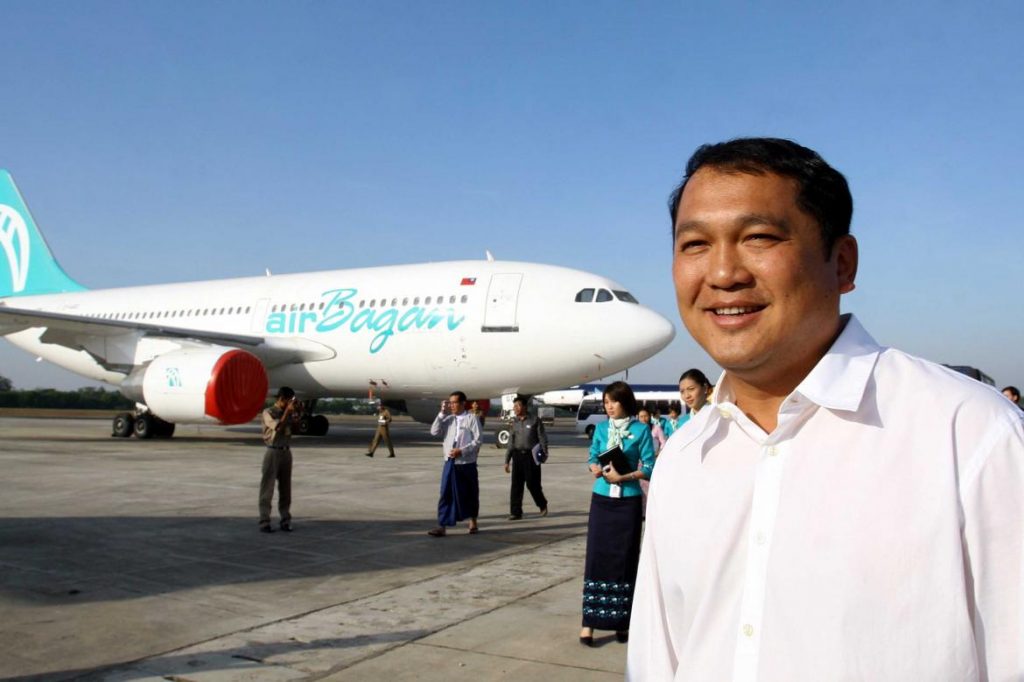
U Tay Za gained international visibility through Air Bagan, one of Myanmar’s earliest private airlines. Launched to support tourism and domestic connectivity, the airline operated:
Domestic routes across Myanmar
Limited international flights
Charter services
Air Bagan symbolized Myanmar’s early attempts to modernize its aviation sector under constrained political and economic conditions.
Aircraft Manufacturing and Maintenance
Beyond commercial airlines, U Tay Za also invested in aviation manufacturing and maintenance, including facilities that attracted attention due to their dual civilian–military relevance.
Relationship With Military Governments
U Tay Za is widely known for his close ties to Myanmar’s military leadership, particularly during periods of junta rule. His companies frequently secured:
Major government contracts
Infrastructure and construction projects
Strategic concessions
Supporters argue that such relationships were necessary for business operations in a highly centralized political system. Critics contend that these ties reinforced economic inequality and entrenched elite privilege.
International Sanctions and Scrutiny
Sanctions Era
Due to his perceived links to military rulers, U Tay Za was subjected to international sanctions by the United States and European Union during the 2000s.
Sanctions targeted:
Business dealings
International travel
Financial transactions
These measures highlighted concerns about crony capitalism, human rights, and military-backed economic structures.
Lifting of Sanctions
As Myanmar initiated political reforms in the 2010s, many sanctions were eased or lifted. This allowed U Tay Za to:
Reengage with international markets
Resume cross-border business activities
Expand regional partnerships
However, renewed political instability after 2021 again raised questions about sanctions and international engagement.
Economic Influence and Criticism
Supporters’ View
Supporters credit U Tay Za with:
Creating jobs
Developing infrastructure
Supporting tourism and aviation growth
Investing in long-term industrial capacity
From this perspective, his businesses contributed to Myanmar’s modernization under difficult conditions.
Critics’ View
Critics argue that:
His rise reflected preferential access to power
Economic benefits were unevenly distributed
Business elites helped sustain authoritarian systems
These debates place U Tay Za at the center of discussions about Myanmar’s political economy and elite capitalism.
Role in Myanmar’s Broader Business Landscape
U Tay Za represents a category of business leaders often referred to as “cronies”—a term used to describe entrepreneurs whose success is closely linked to political patronage.
Understanding his role provides insight into:
How capital accumulated under military rule
The interaction between state power and private enterprise
The challenges of economic reform in post-authoritarian systems
Life Away From the Spotlight
Compared to political figures, U Tay Za maintains a relatively low public profile. He rarely gives interviews and avoids overt political statements, preferring to operate through corporate structures rather than public advocacy.
Legacy and Historical Significance
U Tay Za’s legacy remains contested:
As a symbol of entrepreneurial success under constraint
As an example of politically connected capitalism
As a figure shaping Myanmar’s aviation and infrastructure sectors
His career mirrors Myanmar’s broader struggle to balance development, transparency, and political accountability.
Why U Tay Za Matters Today
Understanding U Tay Za is essential to understanding:
Myanmar’s business–politics nexus
The impact of sanctions on private enterprise
The evolution of elite economic power
His story offers valuable lessons about how economic influence operates in politically restricted environments.
❓ Frequently Asked Questions (FAQ)
1. Who is U Tay Za?
U Tay Za is a Myanmar business tycoon and founder of Htoo Group, with interests in aviation, construction, and tourism.
2. What is Htoo Group?
Htoo Group is a major Myanmar conglomerate operating across multiple industries, including aviation and infrastructure.
3. Why is U Tay Za controversial?
He is controversial due to his close ties to military governments and past international sanctions.
4. What airline did U Tay Za found?
He founded Air Bagan, one of Myanmar’s early private airlines.
5. Was U Tay Za sanctioned internationally?
Yes. He faced sanctions from Western governments during Myanmar’s military rule, some of which were later lifted.
6. Is U Tay Za still active in business?
Yes. He remains influential in Myanmar’s business sector, though public visibility varies.