Shwedagon Pagoda — The Golden Soul of Myanmar
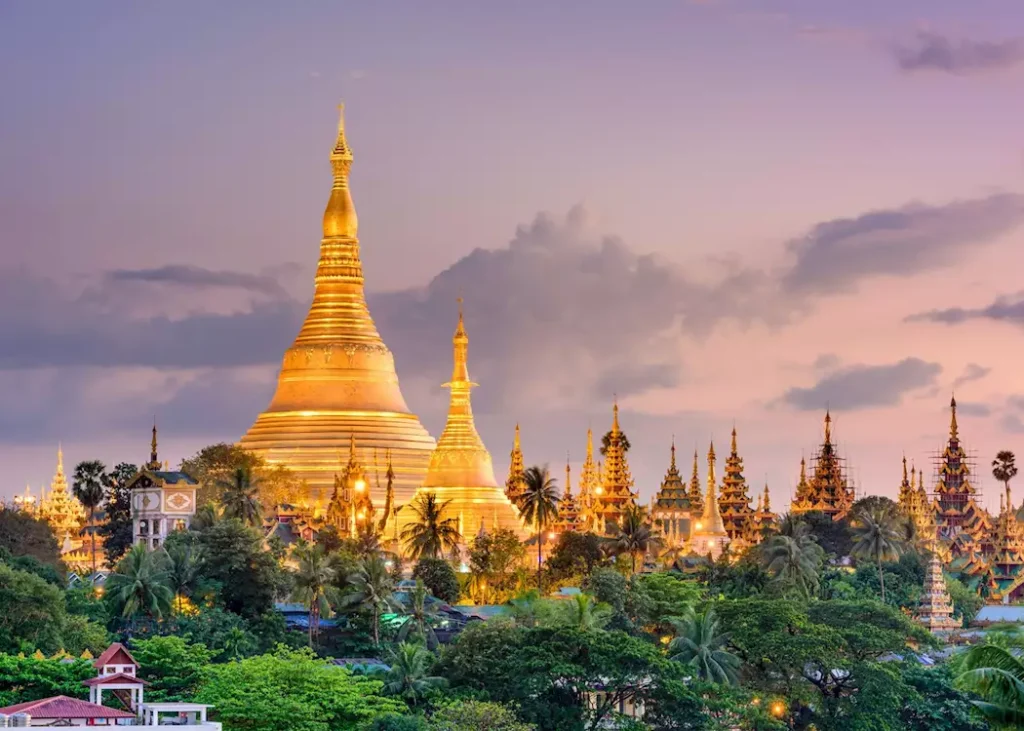
Shwedagon Pagoda, also known as the Shwedagon Zedi Daw, is not merely a religious monument—it is the spiritual heartbeat of Myanmar. Rising above the city at 99 meters (326 ft), the gilded stupa dominates the Yangon skyline, shimmering with gold plates and crowned with diamonds and precious gemstones. It is the most sacred Buddhist site in the country and has stood as a beacon of faith, resilience, and identity for centuries.
A Legend Older Than History
Local belief holds that Shwedagon Pagoda is more than 2,500 years old, making it one of the earliest Buddhist structures in the world. According to tradition, two merchant brothers from Myanmar, Tapussa and Bhallika, traveled to India shortly after the Buddha attained enlightenment. They offered gifts of honey cakes to the Buddha, and in return, were blessed with eight strands of his sacred hair. The brothers brought the relics to the land that would later become Myanmar, where they were enshrined on Singuttara Hill by King Okkalapa.
Archaeologists debate the legend, but the truth remains clear: Shwedagon’s origins stretch deep into antiquity. The pagoda predates many great temples of Southeast Asia and has endured earthquakes, political turbulence, invasions, and colonial occupation. Each time, it has been rebuilt, strengthened, and revered even more.
What Makes Shwedagon Unique
No landmark in Myanmar symbolizes the nation’s devotion and identity quite like Shwedagon. To Myanmar Buddhists, it is not simply a place of prayer. It is a place of rebirth, renewal, and national memory.
The Golden Crown of Yangon
The most striking feature of Shwedagon Pagoda is the gold. Not paint, not gold plating, but layers of pure gold donated over centuries. The stupa is covered with over 30 metric tons of gold, from gold leaves placed by pilgrims to entire gold plates installed by wealthy donors and royalty.
The uppermost section, the hti (umbrella crown), is a treasure in itself. It is adorned with:
5,448 diamonds
2,317 rubies
1,065 sapphires
a 76-carat diamond at the pinnacle
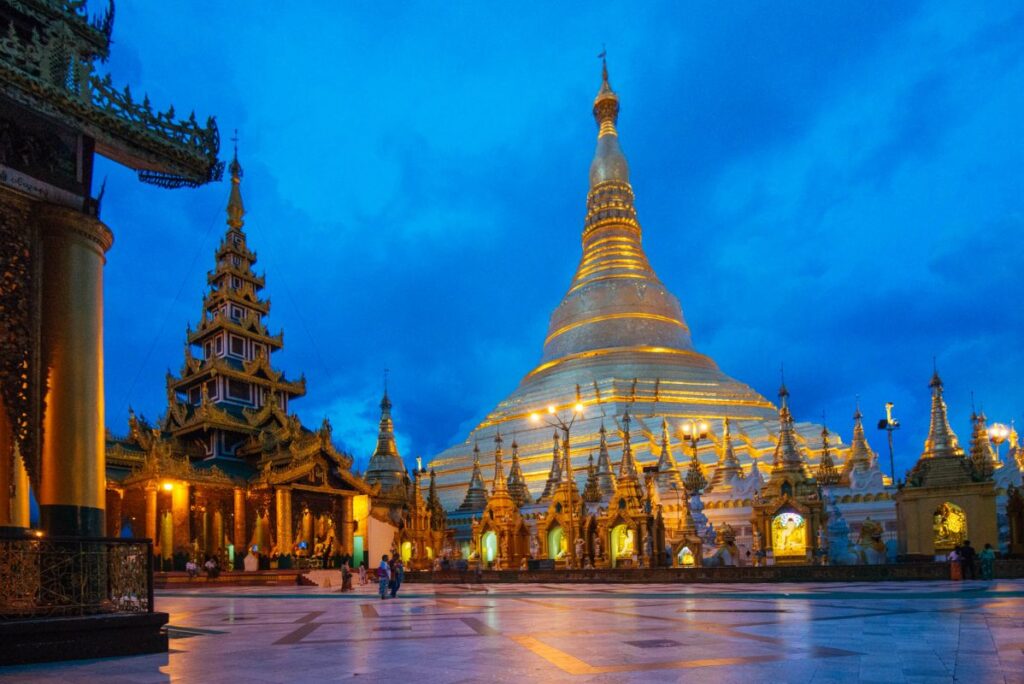
The entire structure glows differently throughout the day—soft pastel gold at sunrise, deep amber at dusk, and radiant brilliance under night lighting. Many visitors say the first glimpse evokes awe that photographs cannot capture.
Spiritual Atmosphere
Unlike many tourist-heavy temples, Shwedagon is a living religious space. Pilgrims come to chant, meditate, offer candles, sweep courtyards as acts of merit, and perform devotion at planetary posts representing days of the week.
The soundscape is gentle: monks chanting, bells ringing, and the quiet shuffle of barefoot visitors. The smell of incense mingles with jasmine flowers offered at shrines, and the flickering glow of thousands of butter lamps creates a warm, intimate spiritual experience.
Architecture and Layout
Shwedagon’s structure reflects Buddhist cosmology and Myanmar architectural heritage.
The Central Stupa
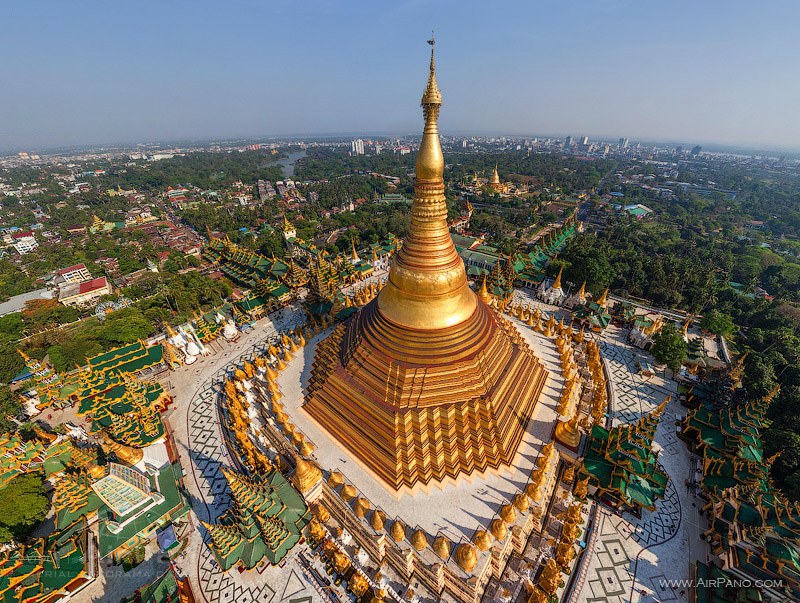
At the center is the towering bell-shaped stupa, symbolizing the path to enlightenment. It stands on a terraced platform representing levels of spiritual ascension. Though you cannot enter the stupa itself, it houses countless relics of earlier Buddhas—perhaps the most sacred collection in Myanmar.
The Four Main Entrances
Each entrance leads visitors up long covered stairways, lined with devotional shops selling candles, flowers, gold leaf, and offerings. These staircases also symbolize spiritual journeys: the ascent to awareness and awakening.
The Planetary Posts
A uniquely Burmese tradition awaits at the cardinal points: eight planetary shrines, each tied to an astrological symbol based on the day of the week you were born. Devotees pour water over Buddha images, wishing for peace, protection, prosperity, and good karma.
The Jade and Gilt Shrines
Surrounding the plaza are dozens of intricately decorated pavilions and temples built in various historical periods. Some are made of teak wood, others of marble or jade, showcasing the nation’s art across dynasties.
History of Survival and Renewal
Shwedagon’s timeline is one of resilience.
Before the Kingdoms
The earliest wooden structures likely predated Myanmar’s recorded history. Earthquakes, humidity, and tropical storms destroyed them, but rulers repeatedly rebuilt the shrine.
The Bagan Age (11th–13th centuries)
During Myanmar’s classical golden age, kings supported major temple architecture. Shwedagon received upgrades, brick layers, and early gilding.
The Taungoo and Konbaung Dynasties
Shwedagon became a national center. Monarchs donated gold, jewels, and renovations. The Konbaung kings—especially King Hsinbyushin and King Mindon—reinforced the pagoda and installed gold plates.
The Colonial Era
When the British seized Yangon in 1824, they occupied the hilltop and used it as a military base. The pagoda became a symbol of resistance and Buddhist nationalism. Mass protests and speeches during the early 20th century independence movement occurred here.
Modern Times
After independence in 1948, Shwedagon regained its religious primacy. Leaders declared it a site of unity. Even during political struggles, monks and civilians gathered there to protest peacefully.
It stands today as one of the most revered Buddhist monuments on Earth—a place where the past, present, and future blend harmoniously.
Visiting Shwedagon Pagoda
Location
Shwedagon sits atop Singuttara Hill in Yangon, a short distance from Kandawgyi Lake and People’s Park. From almost anywhere in central Yangon, you can see the stupa gleaming above the rooftops.
Best Time to Visit
The ambiance changes dramatically throughout the day:
Sunrise (5:30–7:00 am): Peaceful, cool, monks chanting, fewer tourists.
Late afternoon to dusk: The golden stupa catches crimson sunset light—ideal for photos.
Night: Illuminated and serene. Many locals visit after work.
Dress Code and Respect
As with all Buddhist sites in Myanmar:
Shoulders and knees must be covered.
No footwear or socks inside.
Avoid loud behavior and photography during prayer rituals.
Offerings should be placed respectfully—not thrown or placed randomly.
Recommended Experiences
Circumambulate clockwise (Buddhist tradition).
Visit your planetary post and pour cleansing water.
Light oil or butter lamps as merit-making.
Sit quietly in meditation among locals—it is deeply calming.
Shwedagon’s Role in Modern Myanmar
Shwedagon Pagoda is more than a heritage site. It is the pulse of Myanmar society.
A Place of Hope and Mourning
People seek blessings for exams, marriages, health, or new ventures. When tragedies strike, families pray here for strength. The pagoda has absorbed centuries of collective fears and dreams.
A Stage of History
Major political and social movements have unfolded here. Monks led peaceful protests from its platforms, calling for justice and compassion. Activists delivered speeches beneath the golden spire. Even today, the pagoda symbolizes moral dignity.
Tourism and Cultural Diplomacy
For international visitors, Shwedagon is often their first encounter with Myanmar’s spiritual identity. Many tourists later say the visit changed their perception of Buddhism and Southeast Asian culture.
Myths, Relics, and Hidden Meanings
The Eight Hair Relics
The core relics are the Buddha’s eight hairs, sealed deep beneath layers of stone and brick. Additional relics of previous Buddhas—Kakusandha, Konagamana, and Kassapa—are also believed to be enshrined within.
The Guardian Spirits
Myanmar folklore speaks of nats—local guardian spirits. They are said to protect Shwedagon, and worshippers still leave offerings asking for protection or intervention.
The Diamond Orb
At the pagoda’s absolute peak, a diamond-encrusted orb shines like a star. When sunlight hits it perfectly, it flashes beams across Yangon, symbolizing enlightenment radiating to all beings.
Photography Tips for Visitors
Capture the transition from sunset to night—the stupa becomes deeper gold, then brilliant white-gold.
Shoot from lower angles near the terraces to emphasize height.
Avoid photographing people praying unless they consent.
Use candles, lamps, and reflections from polished marble for atmospheric foregrounds.
Practical Information
Entrance Fee: Typically applies to foreigners (locals enter free).
Opening Hours: Usually early morning to late night.
Guides: Local temple guides speak English and share history and spiritual meanings.
Storage: Shoe racks are available at entrances.
Final Thoughts
Shwedagon Pagoda is not simply a tourist attraction; it is a living testament to faith, memory, and continuity. Every glimmer of gold and every quiet prayer represent a connection between generations. When you stand there—barefoot on polished stone, surrounded by monks, families, and elders—you feel Myanmar’s cultural soul.
Whether you come for architecture, history, meditation, or photography, Shwedagon remains unforgettable. It welcomes the curious, the spiritual, and the lost, offering them a moment of clarity under the glow of its eternal light.
Frequently Asked Questions (FAQ) — Shwedagon Pagoda
1. What is Shwedagon Pagoda?
Shwedagon Pagoda is Myanmar’s most sacred Buddhist temple, located in Yangon. It is famous for its 99-meter golden stupa, ancient relics, and more than 2,500 years of history, making it one of the world’s oldest Buddhist monuments.
2. Why is Shwedagon Pagoda important?
It houses holy relics of four Buddhas, including eight strands of hair from Gautama Buddha. For Myanmar Buddhists, it is a symbol of spirituality, identity, and national heritage. Many major religious and social events in Myanmar have taken place here.
3. How old is Shwedagon Pagoda?
Local tradition says the pagoda is over 2,500 years old. Historical records confirm renovations from the 6th–10th centuries and large expansions during the Bagan, Taungoo, and Konbaung dynasties.
4. What is the pagoda made of?
The stupa is covered with real gold plates and gold leaves donated by kings, monks, and everyday worshippers. Its crown (hti) is adorned with thousands of diamonds, rubies, sapphires, and a 76-carat diamond at the top.
5. Can visitors enter the pagoda?
You cannot enter the central stupa because it is sealed and houses relics. However, visitors can explore the surrounding terraces, shrines, meditation halls, prayer areas, and planetary posts.
6. Do I need to remove my shoes?
Yes. All footwear and socks must be removed before stepping onto temple grounds. This includes sandals, slippers, and boots.
7. What is the dress code?
Respectful clothing is required:
Shoulders and knees must be covered.
No revealing clothing or short shorts.
Longyi (sarong-style cloth) is available for rent or purchase at entrances.
8. What are the best times to visit?
Early morning (sunrise): calm, fewer crowds, monks chanting.
Late afternoon to sunset: beautiful golden light, perfect photos.
Evening/night: glowing atmosphere and cooler temperatures.
9. How long does a visit take?
Most visitors spend 1.5–3 hours exploring. Photographers and meditators often stay longer.
10. How much is the entrance fee?
Local Myanmar citizens enter free. Foreign visitors pay a ticket fee (varies slightly over time), which helps maintain the temple.
11. Is photography allowed?
Photography is permitted in public areas, but avoid:
Flash inside small shrines,
Disturbing worshippers,
Taking close-up photos of people praying without permission.
12. What is a planetary post and why do people pour water on statues?
Myanmar astrology divides the week into eight directions. Each person has a planetary post based on their day of birth. Devotees pour water on the Buddha image at their post to cleanse karma, reduce bad luck, and invite blessings.
13. Can Shwedagon Pagoda be visited for meditation?
Yes. Many locals meditate around the terraces, shrines, and quiet corners. Visitors may sit respectfully, close their eyes, and join silently.
14. When was Shwedagon last renovated?
The pagoda undergoes regular restoration to maintain its gold layers and structural integrity. Major restorations were performed after earthquakes and during 19th–20th century royal and community-led renovations.
15. How do I reach Shwedagon Pagoda?
It is located on Singuttara Hill, central Yangon. You can reach it by taxi, Grab, private car, or public bus. Most hotels and tour guides know the route well.