The Thirty-Seven Nats —
Not Saints, Not Demons, but Suffering People Made Sacred
The official pantheon follows a logic:
Almost every Nat died violently or unjustly.
Their stories are warnings wrapped in prayer.
Worship them, and they protect you.
Insult them, and they punish without hesitation.
Below are their legends — as Myanmar tells them.
Where history and myth blur, that is where the Nats wake.
🔥 1. Thagyamin — King of the Celestial Realm
The first Nat is not human.
He is the Burmese version of Indra — divine, radiant, thunder in his hand.
He does not punish people by himself anymore.
He delegates.
That is why the other 36 exist.
Thagyamin’s festival begins each Burmese New Year — Thingyan.
He descends from the heavens, records good and evil in a golden book, and disappears into wind.
He is order.
The others are chaos.
🔥 2–3. The Shwe Hpyin Brothers (ရွှေဖြင်းညနန်း / ရွှေဖြင်းကြီး)
The Two Spirits Who Laugh at Kings
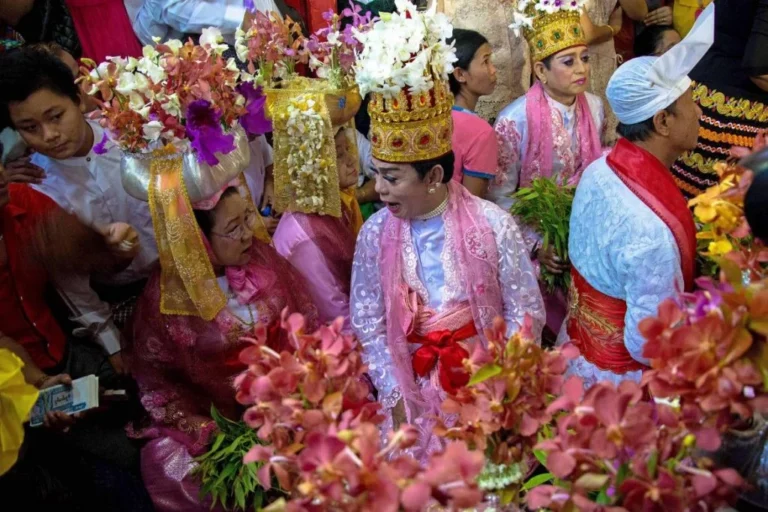
Their names mean Golden Banyan:
Shwe Hpyin Gyi (the elder)
Shwe Hpyin Nge (the younger)
They were soldiers under King Anawrahta.
During a grand ritual, they failed to supply a single brick — just one brick — and the king executed them.
The people mourned.
The king did not care.
But then horses screamed.
Grain rotted.
Men heard stomping at night.
The king realized he did not kill soldiers —
he created gods.
He declared them official Nats, built shrines, and the land calmed.
To this day, they remain the most mischievous Nats.
At the Taungbyone Festival, they demand:
alcohol
money
cigarettes
dances
shameless joy
If you give too little, they mock you.
If you give too much, they adore you.
No one leaves Taungbyone unchanged.
🔥 4. Me Wunna — The Flower-Eating Ogress (မဲဝုနာ)
Before she was a Nat, she lived in Popa’s forests.
She ate flowers, not flesh.
She loved deeply, and was betrayed deeper.
When she bore the Shwe Hpyin brothers, the king turned against her.
She ran, she hid, she died without justice.
The mountain held her spirit like a womb.
Me Wunna is not fear — she is grief.
Offerings to her are delicate:
flowers, perfume, a woman’s tears when she asks for children.
She protects mothers and punishes cruelty.
🔥 5–6. The Mahagiri Nats (မဟာဂီရီ) — Lord and Lady of the Great Mountain
They were siblings, born strong, feared by kings.
Their power scared the ruler of Tagaung, who tricked the brother, captured him, and burned him alive.
His sister died trying to save him.
Their spirits rose as flame.
To appease them, people hung their images on doors to protect families from disaster.
When Anawrahta centralized the pantheon, he placed them at Popa.
They are the oldest guardians of Myanmar homes.
Even today, in villages, the Mahagiri symbol hangs above doorways in quiet defiance.
🔥 7. Mintara Nat — The Archer with the Quiet Breath
Mintara was a master bowman.
When he refused to kill an innocent noble, the court framed him as a traitor.
He died with arrows in his body — not his own, but his students’.
Legend says each arrow felt like betrayal.
He protects travelers, hunters, and those wrongly accused.
If you pray to him, do so before a journey.
🔥 8. Hintha Nat — The Bamboo Dancer
Born during monsoon, she danced through storms.
She died when her performance collapsed under royal sabotage.
The bamboo that lifted her body never rotted.
Villagers claim it still hums when the wind changes direction.
Hintha blesses performers and musicians.
She loves laughter, hates envy.
🔥 9. Min Kyawswa — The Drunken Prince of Gambling and Horses
He lived for pleasure — racing, wine, women, and arrogance.
He fought battles he did not need to fight, rode horses he could not tame.
Then one day a horse threw him.
He died in mud, unclaimed by the palace he once ruled as a son.
Min Kyawswa is the favorite Nat of gamblers, debtors, and drunkards.
He is dangerous because he understands desire.
He answers prayers — but always takes something in return.
🔥 10. Thonbanhla — The Lady of Grace and Broken Promises
Her beauty ruined her.
Men fought duels, accused her, demanded her hand.
When she rejected the court’s favorite noble, she was murdered in silence.
Her shrine is covered in flowers and combs.
Women ask her for charm, resilience, and the power to say no.
🔥 11. Nyaung Gyin — The Iron-Armed General
He fought for Pagan until the king feared him more than enemies.
Poisoned wine ended his life.
He died laughing, saying:
“You cannot kill iron.”
His spirit is called when wars threaten villages.
🔥 12. Myitzu Nat — The River Bride
A bride drowned on her wedding day.
Villagers claim the river pulled her gently, like a jealous lover.
Her shrine stands where the current slows.
Women pray to her when marriages feel uncertain.
Men avoid her, afraid she will invite them underwater.
🔥 13. The Taungbyone Brother’s Lover — The Loyal Soldier
When the Shwe Hpyin brothers were executed, one soldier followed them in grief.
He starved himself at their grave until his spirit burst like fever.
They welcomed him as kin — not brother, not servant, but eternal companion.
No Nat protects loyalty more fiercely.
🔥 14. Byatta and 15. Me Nandar (The Mango Lovers)
Byatta was a royal messenger who fell in love with Me Nandar, a mango-seller.
Their romance angered the palace, not because of law, but because of class.
Their child was taken.
Their bodies were buried separately.
Their spirits found each other long after.
If you offer mangoes to them together, wishes come quickly.
🔥 16–37. The Remaining Nats — The Tapestry of Grief, Courage, and Legacy
The rest of the pantheon is vast — soldiers, servants, princesses, guardians of fields, river spirits, market protectors.
Each story ends the same way:
a wrongful death, an unburied memory, a spirit too powerful to ignore.
Below are their legends in the same living tone Myanmar tells around fires and festival altars.
🔥 16. Taungthaman — The Ferryman of Still Waters
A boatman who ferried lovers across a lake.
He drowned saving strangers.
His shrine stands near bridges where suicides think twice.
🔥 17. Ma Ngwe Taung — The Jealous Bride
Her husband betrayed her with a cousin.
She hung herself from a tamarind tree.
Now she punishes infidelity without mercy.
Couples leave offerings when trust is shaky.
🔥 18. Letpan — The Mango Tree Guardian
Executed for saving villagers from famine.
Buried with a mango seed in his fist.
Every Letpan tree that grows is a prayer.
🔥 19. Tuyin — The Horse Tamer
He rode stallions no one dared approach.
One kicked his heart open.
Riders whisper his name before mounting.
🔥 20. Aungpinle — The Lady of Markets
A merchant cheated to ruin.
She died in debt, clutching ledgers.
Traders honor her to keep their businesses upright.
🔥 21. Thandaya — The Last Singer
A palace favorite who sang peace to soldiers.
When a minister’s son harassed her, she resisted.
He had her silenced forever.
Her spirit lingers in concert halls.
🔥 22. Tharaphu — The Spear-Bearer
A royal guard who refused to slaughter civilians.
Executed publicly, he died standing.
Farmers pray to him to protect harvests.
🔥 23. Bago Medaw
A mother spirit of the Bago region.
She guards children and punishes abusers.
🔥 24–37. The Regional Spirits
Their names vary by town and dialect.
They protect:
granaries
forests
bridges
cattle
border passes
seasonal rains
forgotten villages
Some are gentle.
Some demand respect.
All remember how they died.
The Nat Kadaw — Spirit Wife, Medium, Rebel, Entertainer
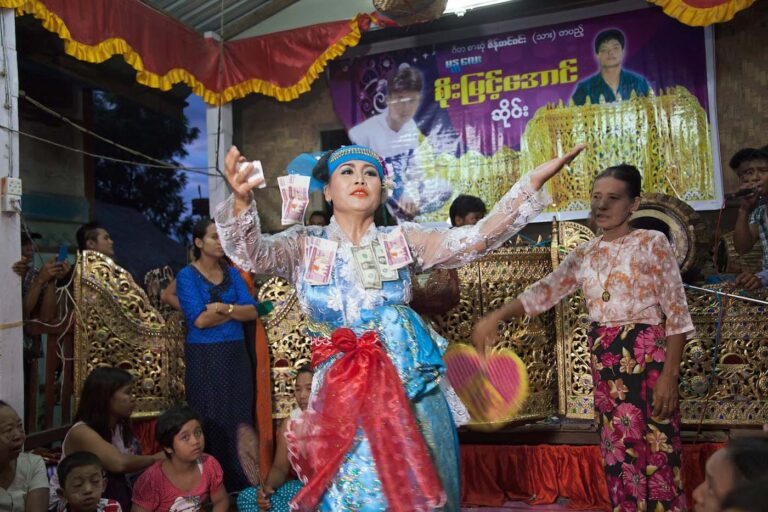
The most beautiful part of Nat worship is the Nat Kadaw.
They are mediums — but also performers, healers, social rebels.
A Nat Kadaw dances until the spirit arrives.
When the Nat enters, speech changes, eyes change, posture changes.
They become rude, seductive, joking, crying.
Many Nat Kadaws are women or LGBTQ+.
In a society where rules press down like stone, Nat worship gives them status and power.
When they dance, ministers kneel.
That is not religion —
that is freedom made ritual.
Festivals of the Spirits — Where Ecstasy Replaces Fear
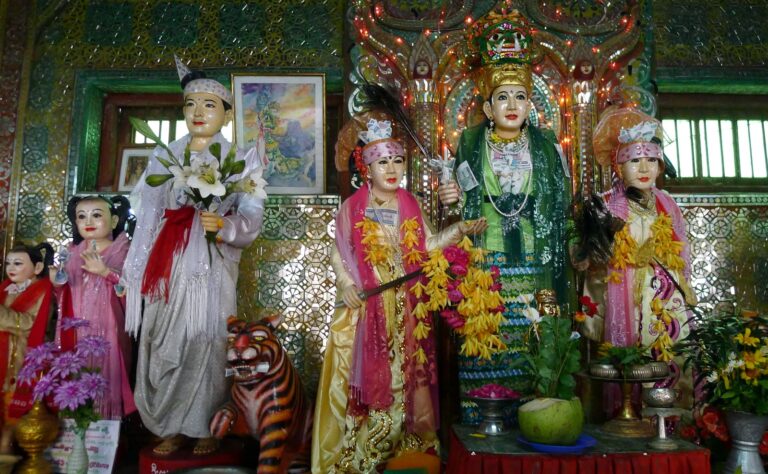
The greatest Nat festivals are not polite.
They are chaotic, sweaty, loud.
At Taungbyone, vendors sell beer beside shrines.
Drums pound.
Mediums kiss strangers.
Money is thrown as if it is endless.
People surrender.
They drink for the Shwe Hpyin brothers.
They laugh at kings.
They pray to spirits who understand suffering.
No foreigner forgets Taungbyone.
No Burmese misunderstands it.
✨ The Contract Between People and Spirits
Nat worship is not superstition.
It is a negotiation.
You honor their pain.
They guard yours.
You give them offerings.
They give you protection, romance, revenge, or luck.
If Buddhism speaks of escape from suffering,
Nat worship speaks of how to survive it.
🌕 Why the 37 Nats Still Matter
Because the stories are not ancient.
A child betrayed by teachers might whisper to Hintha.
A widow might light candles for Me Wunna.
A gambler might pray to Min Kyawswa before a casino.
A merchant begs Aungpinle to keep thieves at bay.
These spirits were born from injustice.
That makes them human.
And so we keep them close.
🔥 24. Shwe Nawrahta — The Golden Military Commander
He was a warrior of grace, admired even by his enemies.
When palace politics turned against him, he was accused of treason.
Executed without trial, his death shook the ranks.
They say his last words were:
“War is not the killing of enemies,
but the breaking of hearts in one’s own army.”
Shwe Nawrahta is honored by soldiers, police, and anyone who feels betrayed by institutions.
Offerings: military badges, small swords, betel leaves.
🔥 25. Mandalay Bodaw — The Royal Teacher
He was a tutor to princes, a master of philosophy.
When a plot against the throne arose, he refused to reveal his students.
The court accused him of conspiracy.
He died kneeling, still loyal.
Teachers whisper prayers to him before exams; parents ask him to protect their children from corrupt authority.
He is harsh toward liars but gentle toward honest minds.
🔥 26. Wuntha — Lord of Craftsmen
A genius smith who forged blades fit for gods, Wuntha was enslaved by officials who demanded commissions without payment.
He worked until his hands cracked.
When he refused to craft a ceremonial dagger for the king’s corrupt consort, he was executed.
In villages, hammer and iron offerings are still left at shrines in his name.
He guards those who work with their hands — carpenters, masons, mechanics.
He hates exploitation.
🔥 27. Shingon — The Forest Hunter
Born in highland forests where shadows speak more truth than daylight, Shingon hunted only what he needed.
When royal hunters slaughtered animals for sport, he sabotaged their camps.
They labeled him a rebel.
He was shot, his body thrown to beasts.
The creatures that ate him became strangely calm, as though they recognized him.
Now he is the Nat of wilderness.
If you camp in Myanmar’s forests, burn incense for Shingon and do not boast about killing animals.
🔥 28. Thonbanhla — The Second Lady of Beauty
Do not confuse her with the earlier Thonbanhla.
This one was born into nobility.
Her name means “She who cannot be rivaled in loveliness.”
Suitors murdered one another over her.
She begged her family to send her away.
They refused.
When a vengeful lover poisoned her, the family buried her jewels with her.
Now she is worshipped by brides, actresses, and young women fighting social judgment.
Her shrines are gentle: combs, perfume, silk.
🔥 29. Mingyi Medaw — The Heartbroken Noblewoman
A daughter of a court lineage, she was married off to secure power.
Her husband took concubines freely and mocked her grief.
When she protested, ministers called her hysterical.
She died from illness of the heart.
Today she is invoked in cases of divorce, custody, and female despair.
She punishes abusive men — quietly, without drama, like a shadow that follows them home.
🔥 30. Sokkya — The Temple Keeper
He guarded a Buddhist shrine and refused to let corrupt monks sell sacred relics.
They framed him and had him beaten to death.
The spirit that rose from him was merciless.
Sokkya will destroy anyone who desecrates a temple — even kings.
Caretakers in rural monasteries keep a tiny offering for him behind bells or beneath altars.
🔥 31. Thandawgan — The Spear Charger
A cavalry legend who could split a shield in half.
He died when troops retreated and left him alone.
When storms shake military camps, soldiers say it is Thandawgan looking for comrades who abandoned him.
His offerings are practical: blades, horse hair, rice wine.
🔥 32. Yankin — The River Guardian of Yangon
Yankin lived near water all his life.
During a flood, instead of saving nobles, he rescued fisher families.
The court called him insolent.
He drowned saving a child.
The river claimed him as its own.
His shrine appears at harbors and ferry points.
He protects sailors and punishes greedy merchants.
🔥 33. Pyinza — The Dancer Who Refused the King
Pyinza danced barefoot, hair flying, showing no fear.
A minister demanded she become his concubine.
She refused publicly.
They strangled her backstage, and the musicians kept playing, afraid to stop.
Her spirit haunts stages where performers doubt themselves.
Nat Kadaw dancers leave her small bells and lipstick tubes.
🔥 34. Dakkhina — Keeper of Southern Roads
He was a border warden killed defending travelers.
Bandits cut him open as he begged them to spare children.
Shrines of Dakkhina appear at crossroads, forest roads, and rural gates.
Truck drivers honk before passing.
He prefers offerings of charcoal, road dust, and cheap cigarettes.
🔥 35. Mingyi Maha — The Unyielding General
A commander who refused to retreat.
His king accused him of insubordination and ordered his execution.
He died laughing, sword raised to the sky.
His spirit is invoked before revolts and uprisings — even today.
Politicians fear his name.
Militants adore him.
🔥 36. Htibyusaung — The Warrior of Midnight
He fought silently, striking only when an injustice crossed past midnight.
He was caught, tortured, and buried in unmarked ground.
Night workers — guards, taxi drivers, gamblers, police — light candles for him.
If you see a lone shrine at a 24-hour tea shop, it may be his.
🔥 37. Kumara — The Child Prince
A young royal who died before his coronation.
Some say poison, others say illness.
What matters is this: the people loved him and felt cheated.
Kumara became a Nat of innocence, luck, and youthful ambition.
Students bring him pens.
Gamblers whisper his name before picking cards.
He is the last of the official 37, closing the circle of injustice.
🏯 How King Anawrahta Turned Rebels into Religion
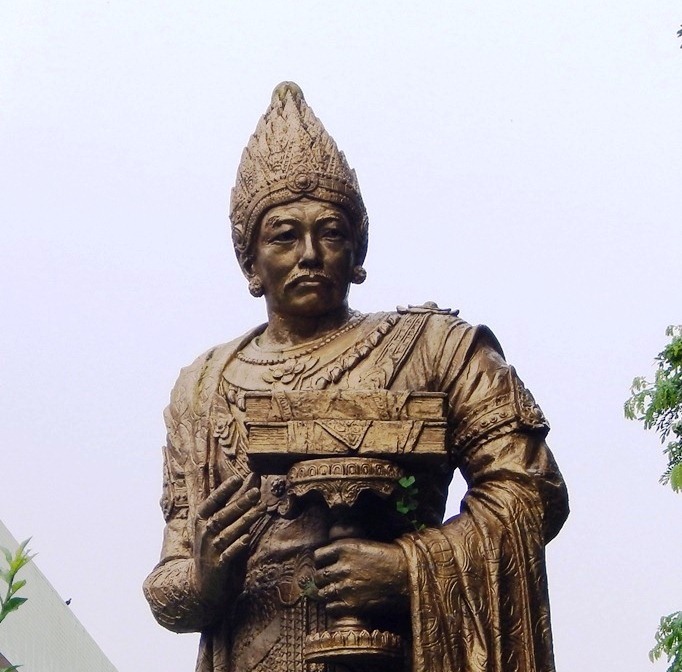
When King Anawrahta ruled Pagan in the 11th century, he wanted Buddhism to unify the land.
But the people clung to their spirits — not because they rejected Buddhism, but because the Nats understood everyday suffering.
So the king crafted a compromise:
He institutionalized the spirits.
He ordered the court to collect the most powerful, feared, or beloved Nat cults.
He canonized 37, arranged them in rank, and placed Thagyamin on top — not because Nat believers demanded it, but because the king did.
Buddha ruled heaven.
Thagyamin ruled spirits.
Anawrahta ruled the land.
Everyone was satisfied.
That was the genius:
He did not erase a religion.
He tamed it.
🧿 Offerings, Taboos, and How to Speak to a Nat
If Buddhism asks for meditation, Nats ask for transaction.
What they like
bananas
coconuts
flowers
rum or whiskey
perfume
gold paper
old coins
What they hate
disrespect
mockery
hypocrisy
broken promises
false offerings
people bragging after prayers
Nat worship is not about holiness.
It is about honesty.
You cannot lie to a spirit that knows exactly how it died.
🕺 The Nat Kadaw — Where Spirit & Gender Break Rules
In Myanmar society, gender norms are strict.
Nat worship cuts them open.
A Nat Kadaw — literally “spirit spouse” — may be:
a woman
a gay man
a transgender person
someone outsiders call “eccentric”
When they dance, the world rearranges:
Ministers offer them money
Generals kneel
Business owners beg them for blessings
The poor bring flowers and tears
In possession trance, the Kadaw becomes the Nat itself.
This is why Nat worship has survived:
It gives the powerless a way to demand justice.
🎭 The Festivals — Chaos That Heals
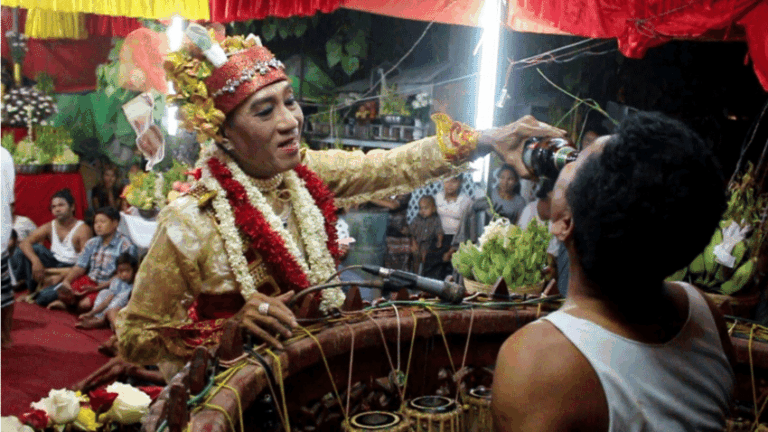
The largest is Taungbyone, near Mandalay.
There, the Shwe Hpyin brothers rule the night:
Drunken merchants
Crying widows
Foreign tourists
Spirit mediums in red lipstick
Musicians pounding drums
Everyone is equal in the dust.
In Amarapura, Yadanagu festival gathers families of mediums — a quieter celebration, full of incense and elegance.
At Popa, festivals honor Me Wunna, Lady of Popa, Mahagiri.
Here, women cry openly, asking for love, children, forgiveness.
These festivals are not shows.
They are public negotiations with trauma.
🧠 What the 37 Nats Teach
Each Nat is a form of injustice:
Betrayed soldier
Abused wife
Executed teacher
Drowned bride
Jealous victim
Wrongly murdered artisan
Rebel hunter
Lover punished for class
Commander executed for courage
No Nat is born from peace.
All of them are born from pain so intense the world itself remembers.
This is why Nat worship endures:
Buddhism teaches how to transcend suffering.
Nat worship teaches how to survive it.
🌏 Modern Myanmar and the Nats
Even in Yangon condos, even in hotels, even in offices with imported chairs —
someone keeps a tiny shrine:
A coconut.
A bunch of bananas.
A cigarette.
A shot of whiskey.
A banknote folded with hope.
The spirits remain, because injustice remains.
FAQ (For Myanmar.com page)
Are the 37 Nats part of Buddhism?
They coexist with Buddhism.
Nat practice is cultural and animist; Buddhism is spiritual and doctrinal.
Most Myanmar people live with both.
Why do Nats die violently?
Because spirits come from unfinished lives —
hatred, betrayal, sudden death, despair.
Can foreigners participate?
Yes — respectfully.
Do not joke, do not bargain with spirits, do not film trance without permission.
Do Nats grant wishes?
They grant exchanges.
You give them honor; they may give protection.
Where should I start?
Mount Popa, Taungbyone, and Yadanagu are the heartlands of Nat power.
Conclusion
The 37 Official Nats are not folklore for tourists.
They are the national memory of injustice, preserved through ritual, dance, and sacrifice.
They are Myanmar’s answer to a question older than kingdoms:
“What do we do with pain too great for one lifetime?”
We worship it.
We give it names.
We let it protect us.