
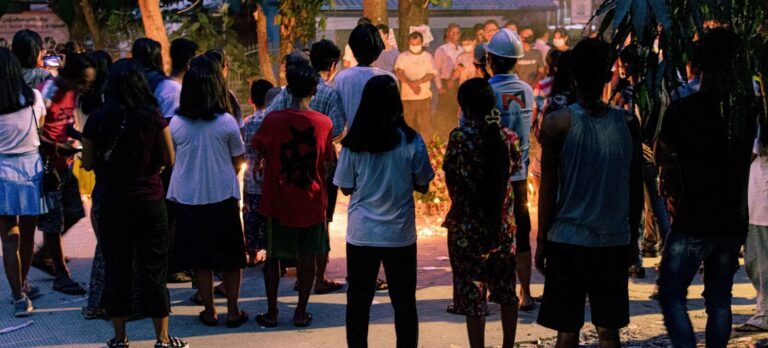
UN Warns Myanmar’s Planned Elections Could Deepen Repression, Instability
Myanmar’s planned late-December elections are approaching under conditions that United Nations officials describe as profoundly restrictive, dangerous and incompatible with genuine democratic participation. Rather than restoring normalcy after years of political crisis, they warn the upcoming ballot may further entrench repression, division and insecurity within the country.
According to the UN Office of the High Commissioner for Human Rights (OHCHR), the environment surrounding the polls is one marked by fear, armed conflict, mass detentions and severe constraints on political freedoms. These conditions, they argue, render the process fundamentally flawed and likely to exacerbate instability rather than alleviate it.
Voting Under Military Control
Jeremy Laurence, the spokesperson for OHCHR, briefed journalists in Geneva and stated that the election is expected to begin on 28 December 2025. He emphasized that the polls will be administered by the military authorities who seized power in the February 2021 coup. The government continues to restrict free movement, political campaigning, information sharing and electoral participation.
Laurence described the election environment as “rife with threats and violence,” noting that communities across Myanmar have faced repression from the state as well as retaliation from armed groups. Civil society organizations, journalists, and local activists report regular intimidation, harassment and surveillance. These conditions make open political competition nearly impossible, he said.
The OHCHR spokesperson added that the election framework overwhelmingly advantages the military, while systematically blocking democratic forces from participation. Political actors, voters and ordinary citizens are left with limited or no avenues to freely express their views without fear of punishment.
Mass Detentions and Political Exclusion
A core concern expressed by UN officials is the sheer number of political detainees held since the 2021 coup.
According to OHCHR, more than 30,000 political opponents, including parliamentarians, activists, journalists, civil servants, and members of the democratically elected National League for Democracy (NLD), are currently imprisoned.
The arrests target not only senior leaders but also local figures seen as capable of mobilizing communities. Student organizers, ethnic minority representatives and online commentators have been detained or forced into hiding. Families of detainees frequently report limited access to legal representation, arbitrary sentencing, or disappearance.
Laurence noted that key political parties have been dissolved or prevented from registering. Many candidates expected to contest the election were barred or arrested, leaving voters with limited options. This selective exclusion forms what he described as an “actively suppressed” political arena, where participation exists in name only.
“A Process That Ingrains Fear and Polarisation”
In his remarks, Laurence rejected claims that the election signals a transition from military rule to democratic governance. Instead, he warned it is more likely to entrench a climate of fear while deepening existing rifts across Myanmar’s population.
“Far from being a process that could spearhead a political transition from crisis to stability and the restoration of democratic and civilian rule, this process seems nearly certain to further ingrain insecurity, fear and polarisation throughout the country,” he said.
According to OHCHR, violence has intensified in many regions as armed resistance groups and the Tatmadaw (Myanmar’s military) clash. Entire communities have been displaced, particularly in Sagaing, Chin, Rakhine, Kachin and parts of Kayah and Kayin states.
Humanitarian agencies estimate that millions of people remain in need of urgent support.
Laurence stressed that the “utmost priority must be to end the violence and ensure the flow of humanitarian aid.” The UN fears that any electoral event conducted in current conditions could distract from humanitarian efforts, fuel internal conflict, or be used to justify further crackdowns.
Independent Rights Expert: “A Charade”
The concerns expressed by OHCHR are echoed—and sharpened—by the UN’s Special Rapporteur on the situation of human rights in Myanmar, Tom Andrews.
In his October 2025 report to the UN General Assembly, Andrews criticized the election plan even more forcefully.
He urged the international community to “unequivocally reject and denounce the charade” being orchestrated by the military junta. According to Andrews, the elections are not a step toward normalcy, but a mechanism designed to solidify power through the veneer of legitimacy.
Unlike UN staff members, Special Rapporteurs are independent human rights experts mandated by the Human Rights Council. Their perspectives are not subject to political negotiation or diplomatic compromise. Andrews has been one of the most outspoken voices calling for global accountability regarding Myanmar.
Institutional Changes Without Genuine Reform
Andrews said the military’s recent institutional adjustments are superficial at best. While the junta has reconfigured some administrative rules, altered electoral structures and launched new commissions, these actions remain cosmetic in nature.
“The junta has reorganized institutions to reposition itself for its election ploy,” he said, “but authority and decision-making remain concentrated in the hands of military leaders.”
The Special Rapporteur emphasized that these changes are not intended to encourage competition or empower voters. Instead, they are designed to tighten the military’s grip on the political system, restrict dissent, and fragment opposition groups.
Key Leaders Remain Imprisoned
According to Andrews, the repression of political opposition is systematic and severe.
The most visible case remains that of Aung San Suu Kyi, the former State Counsellor and leader of the National League for Democracy. She has been imprisoned since shortly after the coup and faces multiple convictions that human rights experts describe as politically motivated.
Other senior NLD members, regional politicians, ethnic leaders and activists have also been detained. Their imprisonment sidelines figures with the credibility and organizational ability to mount a serious challenge to the junta’s control.
In total, at least 40 political parties, including the NLD, have been dissolved under new legal provisions. Those who try to reorganize risk arrest, asset seizures or intimidation by security forces.
Elections Without Public Confidence
The Special Rapporteur warned that elections “held on the junta’s terms” will heighten divisions and provoke further violence.
Many ethnic minority communities already reject the legitimacy of the central government, and armed conflict continues in regions where the military has historically exercised limited control.
Entire districts remain outside Tatmadaw control, meaning a nationwide vote cannot be conducted in a secure or uniform manner. Elections in militarized areas may be symbolic or coercive, while urban centers may experience heavy surveillance or selective access to information.
These structural problems leave many Myanmar citizens without the ability to participate meaningfully or safely in the electoral process.
Andrews cautioned that “the people of Myanmar are expected to reject the results as illegitimate.” Instead, he stated, the junta’s “true target audience is foreign governments whose recognition it seeks.”
Digital Restrictions and Criminalization of Dissent
A central strategy employed by the military government has been the legal regulation of digital expression.
New electoral laws criminalize criticism, impose severe penalties for “disruption,” and allow authorities to prosecute individuals who share politically sensitive material online. Social media posts, private messages and even encrypted communications can lead to arrest.
Rights organizations report that journalists and media outlets have been forced to self-censor or go underground. Online speech laws serve as a mechanism for surveillance and intimidation, amplifying the environment of fear described by the UN.
Digital shutdowns, internet throttling and selective blocking of platforms have also occurred in areas where anti-military sentiment is high, particularly during military operations or public protests.
Humanitarian Crisis Overshadowed by Political Theater
Beyond the political consequences, the UN insists that Myanmar’s humanitarian catastrophe should be the international community’s primary concern.
Millions of people in Myanmar face displacement, shortages of food and medicine, or lack of access to education and healthcare. The conflict has disrupted farming cycles, destroyed homes, and strained already fragile infrastructure.
Aid delivery remains heavily regulated by military authorities, who often restrict access to communities suspected of supporting resistance forces.
OHCHR warns that the election may be used to justify continued isolation or justify intensified crackdowns on regions perceived as disloyal.
By redirecting attention toward political spectacle, they argue, the junta risks worsening humanitarian suffering and undermining relief efforts.
International Responses Remain Fragmented
The UN and independent experts have called for cohesive global action.
However, international responses remain inconsistent.
Some countries have condemned the junta, imposed sanctions or cut diplomatic engagement. Others maintain economic or strategic relationships with Myanmar’s military leadership, often citing regional stability or counterbalancing influence from rival powers.
Human rights observers argue that fragmented international engagement enables the junta to maneuver politically and economically. Without coordinated pressure, leaders in Naypyidaw may interpret elections as a tool to consolidate control.
The Special Rapporteur urged governments not to recognize or endorse the electoral process. He called for an immediate focus on human rights, humanitarian access and accountability for abuses.
UN Conclusion: Halt Violence, Deliver Aid, Restore Rights
Both OHCHR and the Special Rapporteur stress that safe, credible elections are impossible under current conditions.
Restoring democratic rule cannot be achieved through a ballot held in an environment of mass detentions, forced disappearances, media censorship and systemic intimidation.
Instead, the UN highlights three immediate priorities:
End the violence and halt military operations that harm civilians.
Guarantee humanitarian access to communities in need across the country.
Restore fundamental freedoms, including political participation, expression and peaceful assembly.
Only once these basic protections are in place, the UN argues, can Myanmar consider a genuine transition to democratic governance.
As Myanmar approaches the December vote, international observers warn that the world must not mistake the appearance of elections for the existence of democracy.
Without meaningful participation, accountability or protection of rights, the ballot risks deepening conflict rather than resolving it.
Frequently Asked Questions (FAQ)
1. Why is the UN concerned about Myanmar’s planned 2025 elections?
The UN argues that the elections are being organized in an environment of widespread repression, conflict and fear. Rights officials say thousands of political figures and activists remain detained, major parties have been dissolved, and many citizens cannot participate freely. This makes the process incapable of restoring democracy.
2. What does OHCHR say about the election environment?
The UN human rights office (OHCHR) says the electoral environment is “rife with threats and violence.” According to its spokesperson, Jeremy Laurence, political participation is actively suppressed, and the vote is controlled by military authorities who seized power in 2021.
3. Are political parties allowed to participate freely?
No. Many major political parties, including the National League for Democracy (NLD), have been dissolved or prevented from registering. New laws restrict political activity, criminalize dissent and punish individuals who attempt to organize or criticize the process.
4. How many people have been detained since the coup?
More than 30,000 political opponents—including elected lawmakers, activists, journalists and local organizers—have been detained since February 2021. Many face long sentences, secret trials or limited access to legal support.
5. Why does the Special Rapporteur call the election a “charade”?
Tom Andrews, the UN Special Rapporteur on Myanmar, says the election is designed to create the illusion of legitimacy for the junta. He argues that institutional changes are cosmetic and do not transfer power away from the military. He urges governments to reject the election results.
6. What is the status of Aung San Suu Kyi and other key political figures?
Aung San Suu Kyi and many high-level NLD leaders remain imprisoned. Their trials are widely considered politically motivated. Their absence from politics means voters lack meaningful choice and opposition movements cannot operate openly.
7. Can a nationwide election realistically be held?
Large areas of Myanmar are outside full military control due to ongoing conflict and resistance forces. In many regions, communities are displaced or fighting continues. The UN argues that it is therefore impossible to conduct a free, safe or inclusive nationwide vote.
8. How do new election laws affect freedom of expression?
New regulations criminalize criticism and label political speech as “disruption.” These laws restrict digital communication and can be used to prosecute people for online posts, comments, or social media activity. The climate of surveillance discourages open discussion.
9. What does the UN recommend?
The UN prioritizes ending violence, restoring humanitarian access and guaranteeing fundamental freedoms. It says these goals must come before elections. Without these conditions, a ballot could worsen insecurity rather than resolve it.
10. How might the international community respond?
Responses remain divided. Some governments impose sanctions or condemn the junta, while others maintain political or economic ties. The UN warns that inconsistent international positions allow the military to exploit the election for diplomatic recognition.
Related posts:
 ASEAN Rejects Myanmar’s Military Elections, Illegitimate
 U.S. Ends Temporary Protected Status for Myanmar Nationals
 Starlink Fuels Myanmar Scam Networks, U.S. Demands Geoblock
 Myanmar Junta Pardons 3,085 Political Prisoners Ahead of Elections
 𝗛𝗼𝘄 𝗠𝘆𝗮𝗻𝗺𝗮𝗿’𝘀 𝗖𝘆𝗯𝗲𝗿-𝗦𝗹𝗮𝘃𝗲𝗿𝘆 𝗡𝗲𝘁𝘄𝗼𝗿𝗸𝘀 𝗘𝘅𝗽𝗹𝗼𝗶𝘁 𝗬𝗼𝘂𝗻𝗴 𝗔𝗳𝗿𝗶𝗰𝗮𝗻𝘀 𝗔 𝗡𝗲𝘄 𝗣𝗵𝗮𝘀𝗲 𝗼𝗳 𝗮𝗻 𝗘𝘅𝗽𝗮𝗻𝗱𝗶𝗻𝗴 𝗖𝗿𝗶𝘀𝗶𝘀
 China Is Powering Myanmar’s Junta Back to Rule